Day 3 of my vacation from routine led to an escape from the confines of the Da Nang tourist hub. Or as one expat I met called it, “Cracker Town.” The day featured seeing a tall Buddhist gal and then getting some Dirty Fingers. Read on to learn more about the day’s adventures.
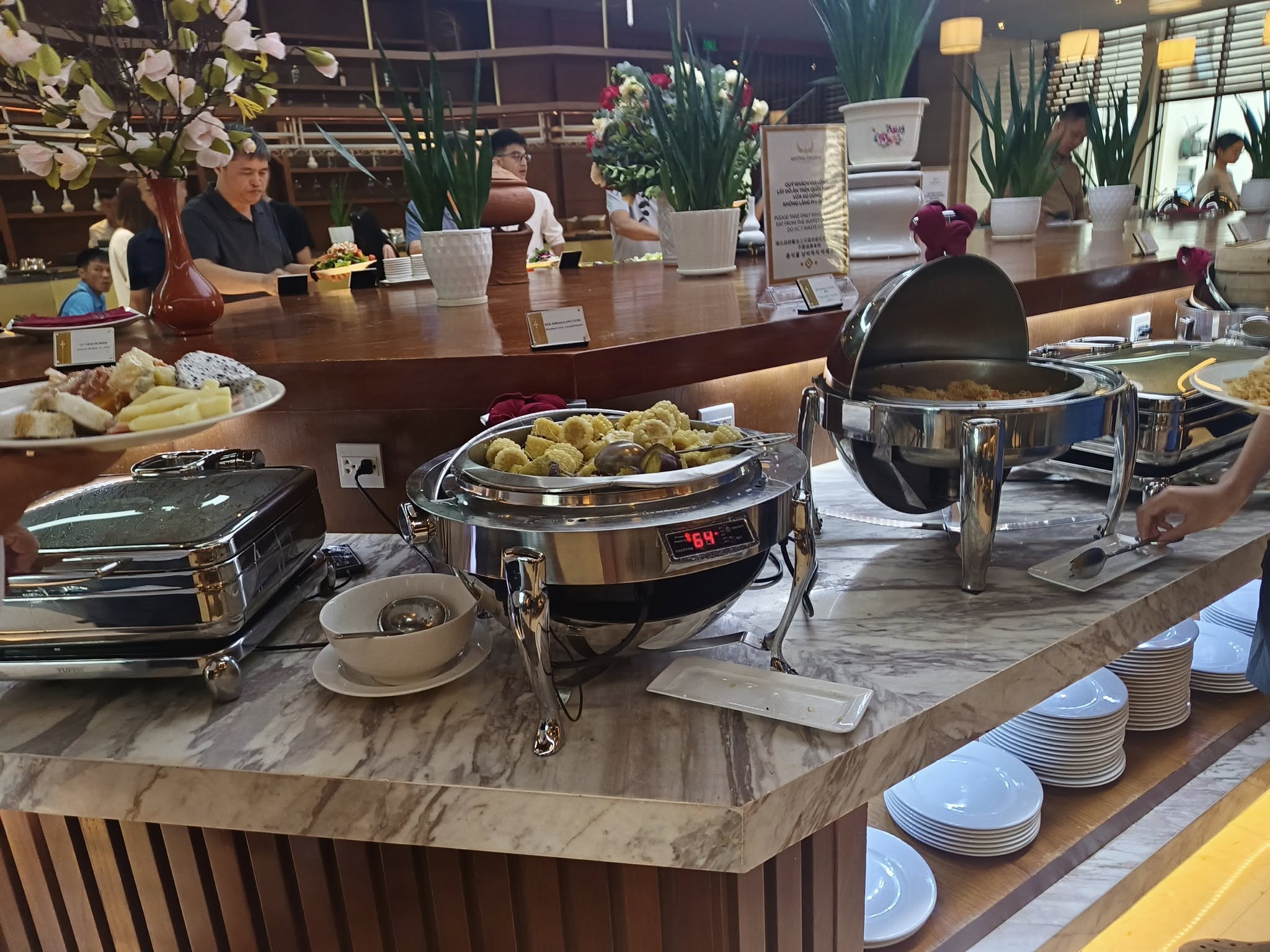
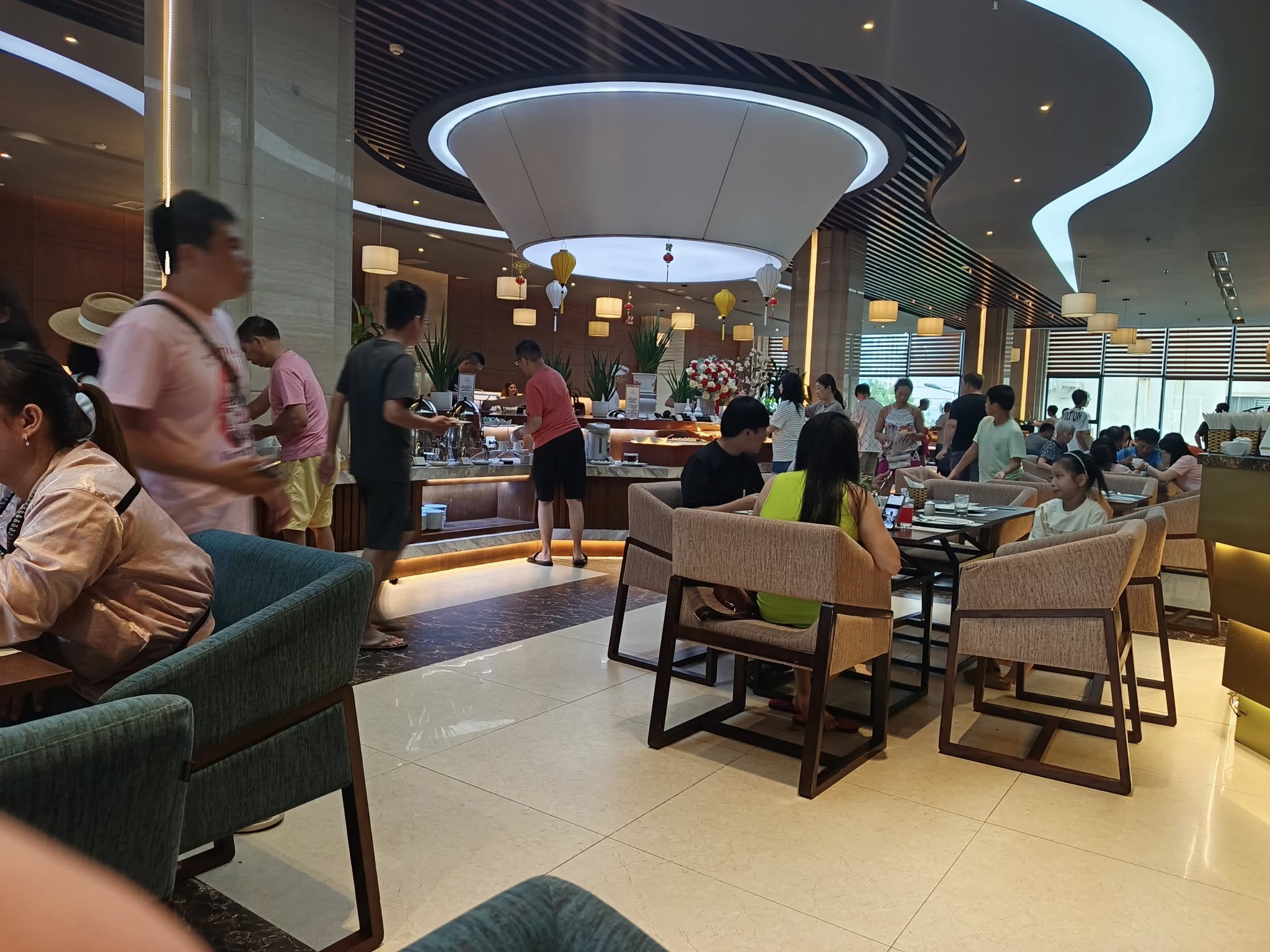
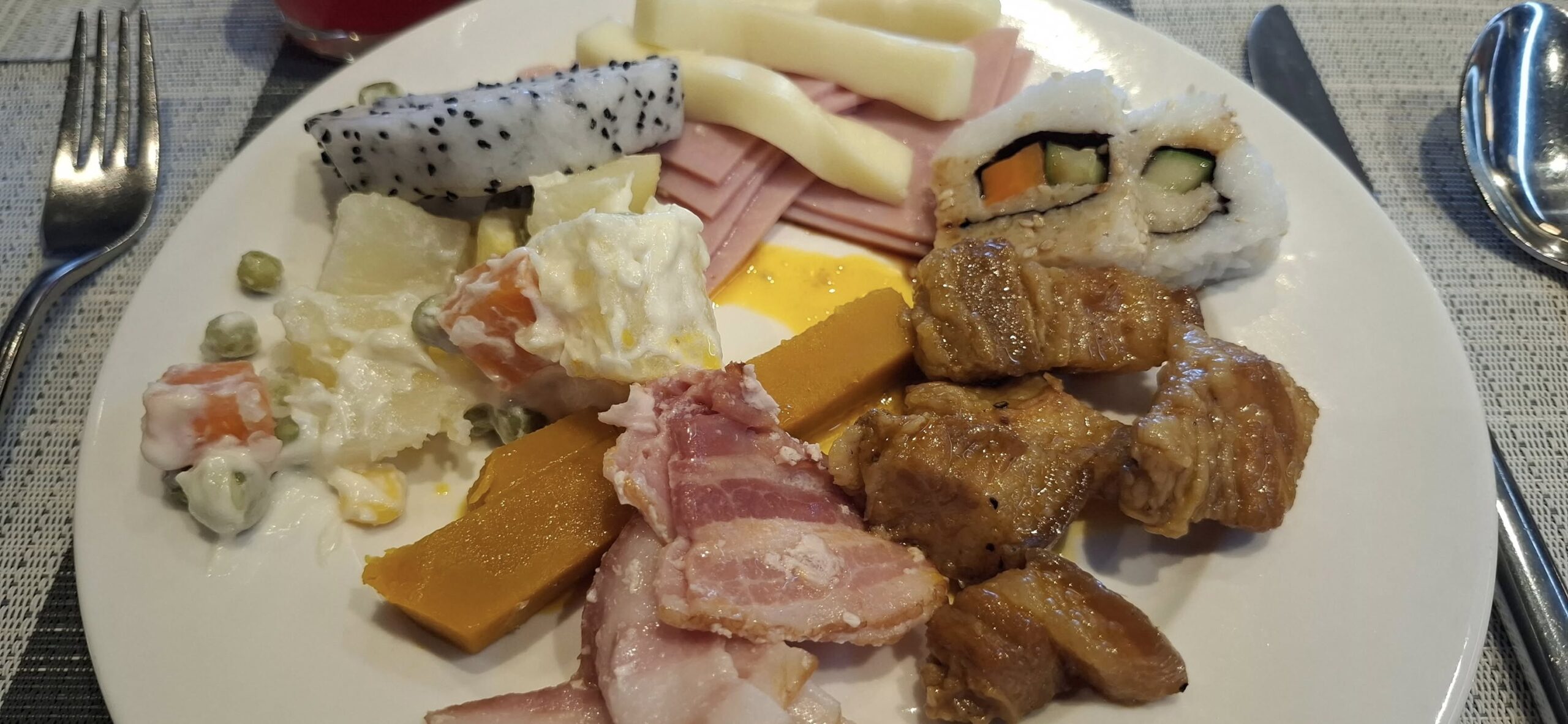
My hotel room comes with a complimentary buffet breakfast, so that’s as good a place to start as any.
So, we had been stopped by a local on the street the day before, and he offered to show us around. Real friendly guy with decent English, so we got his contact info for WhatsApp and said we’d let him know. There’s a giant statue located in the hills, visible from town, at a famous Buddhist Temple, locally known as Lady Buddha. Swan arranged for him to drive us there and back with a 1 p.m. pickup.
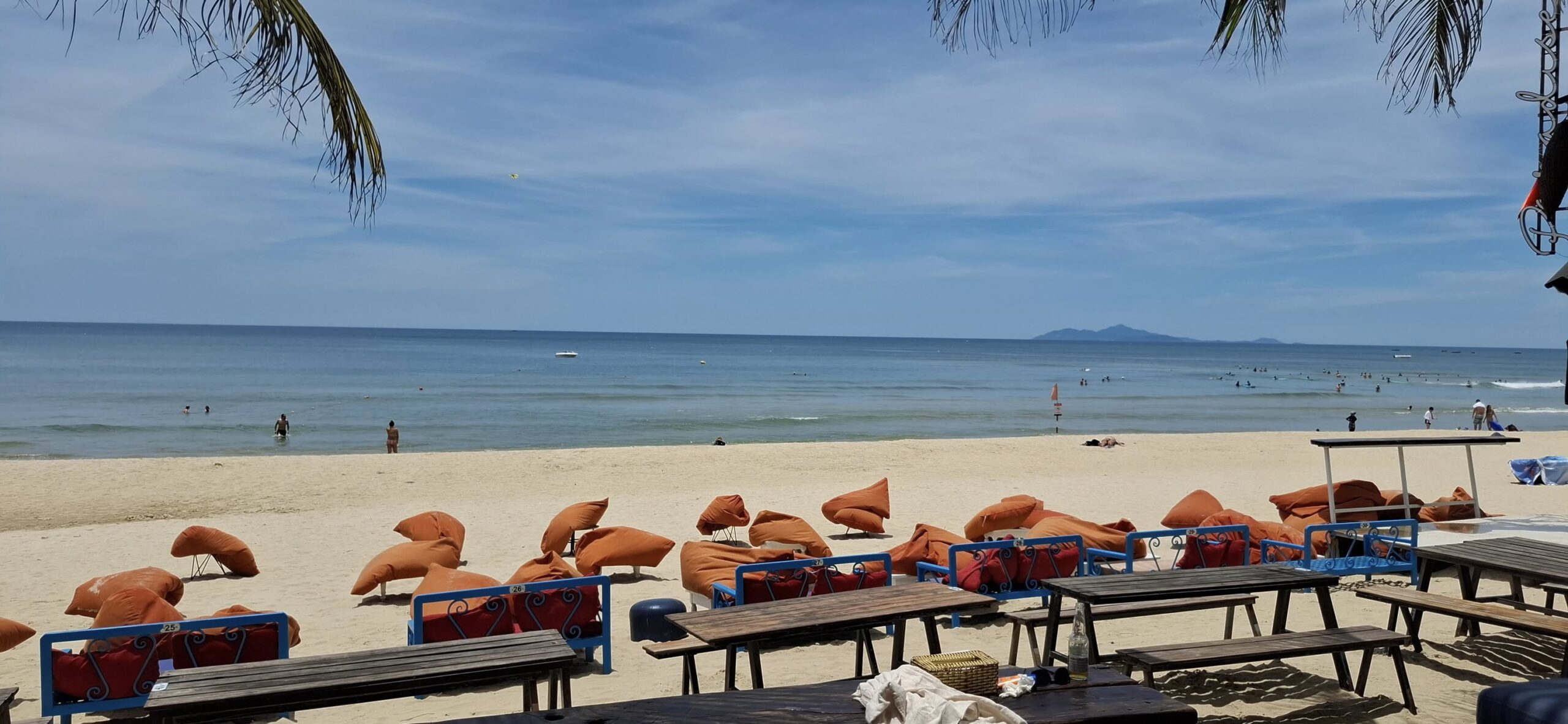
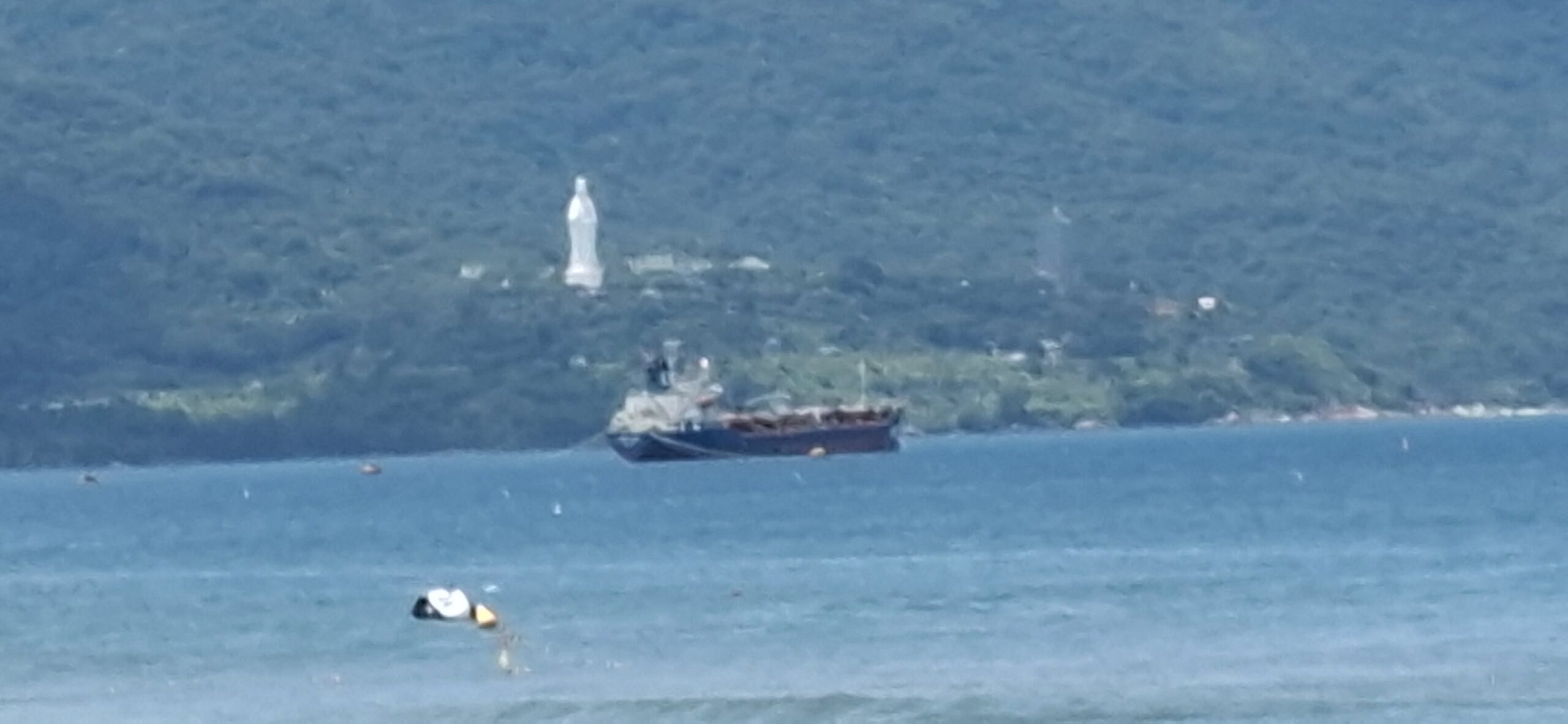
From our perch, I put the camera on zoom mode and grabbed a shot of Lady Buddha.
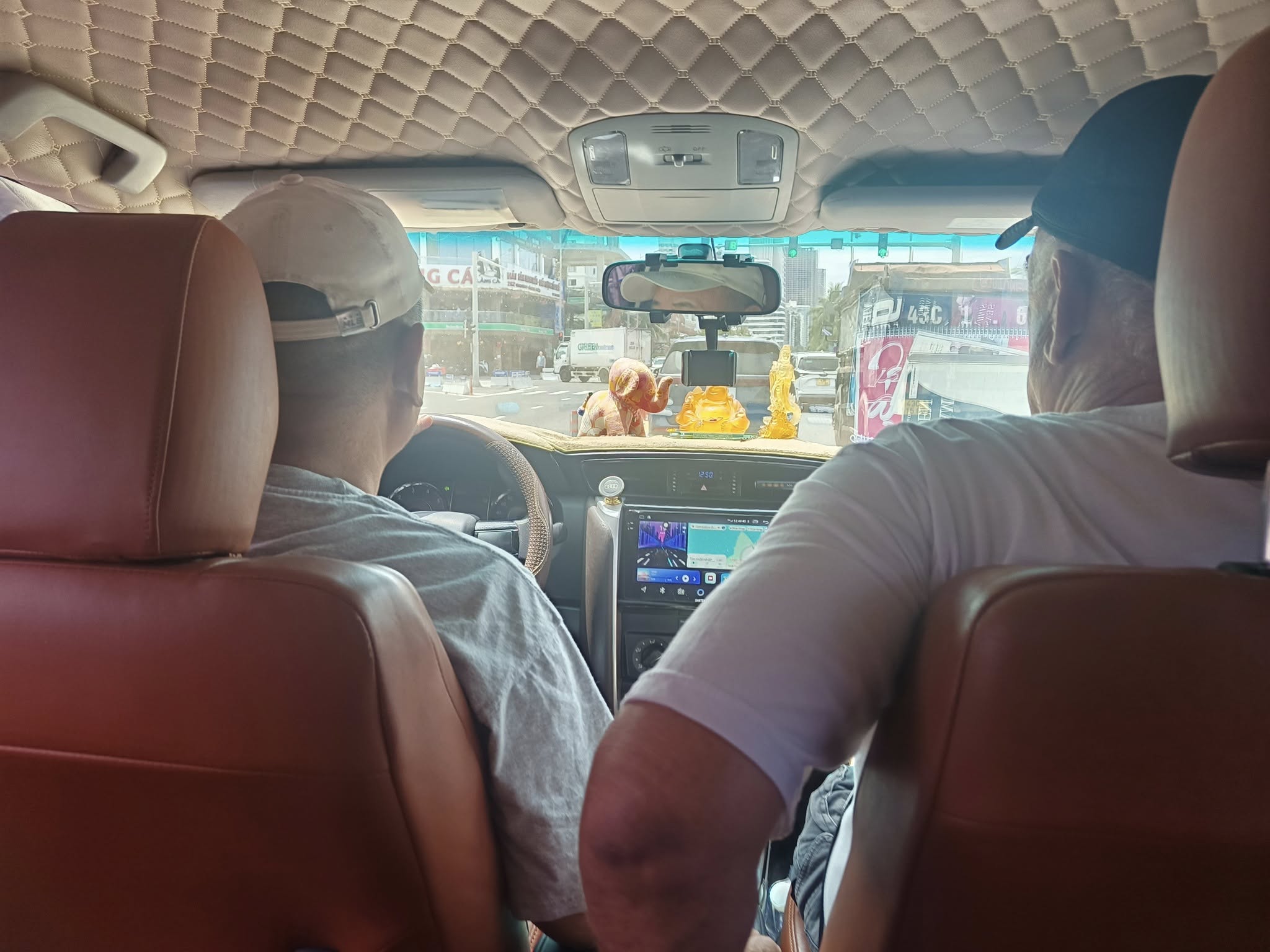
As mentioned, Tom speaks relatively good English and has a nice sense of humor. Along the way, he steered the conversation to the Vietnam War, which made me a tad uncomfortable. He played this clip of Robin Williams in “Good Morning, Vietnam” on his dashboard video box:
He also talked about the Mai Lai massacre, but the best I could offer in response was that the officer responsible was sentenced to prison (I subsequently went back and read the link above and saw that Lieutenant Calley only served three years under house arrest). Anyway, we moved on to other topics and it was a mostly pleasant ride.
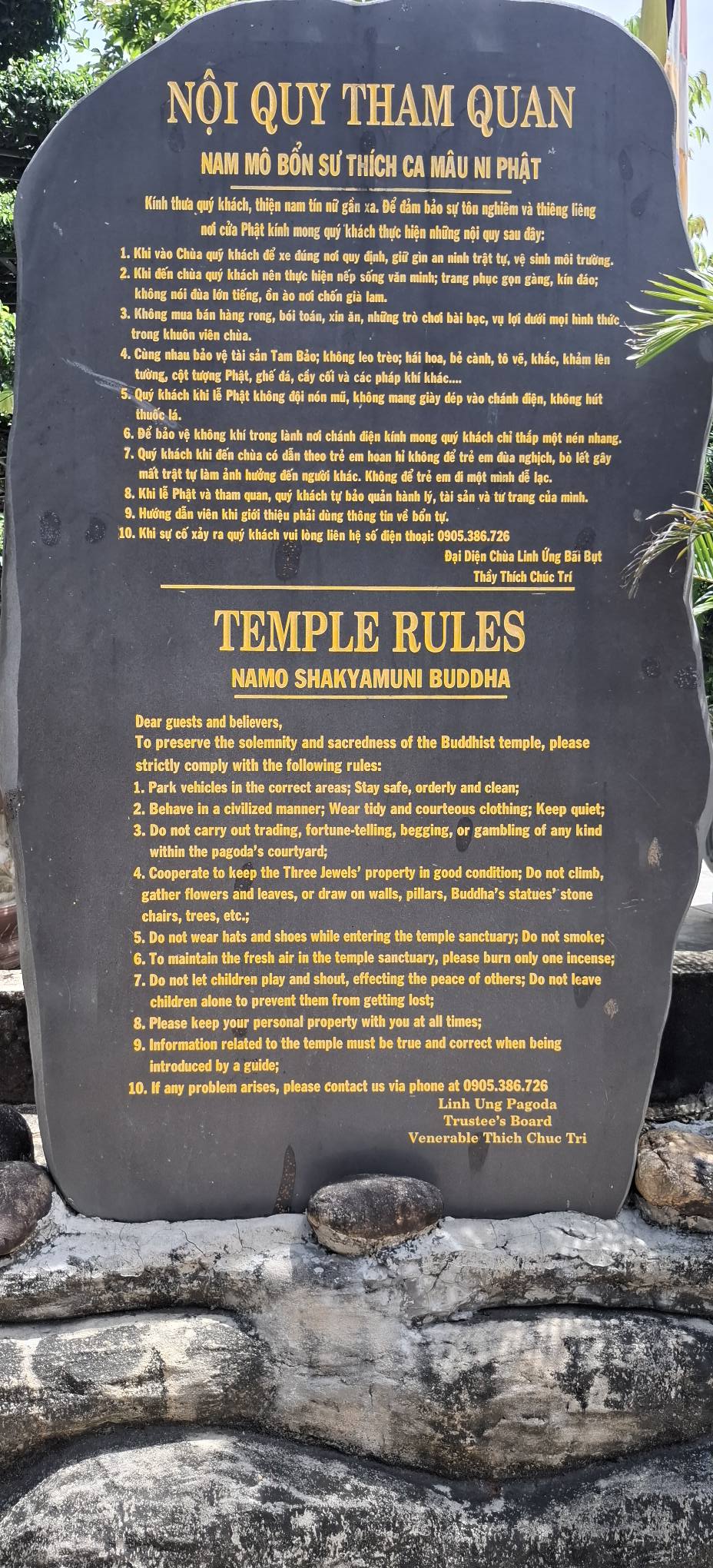
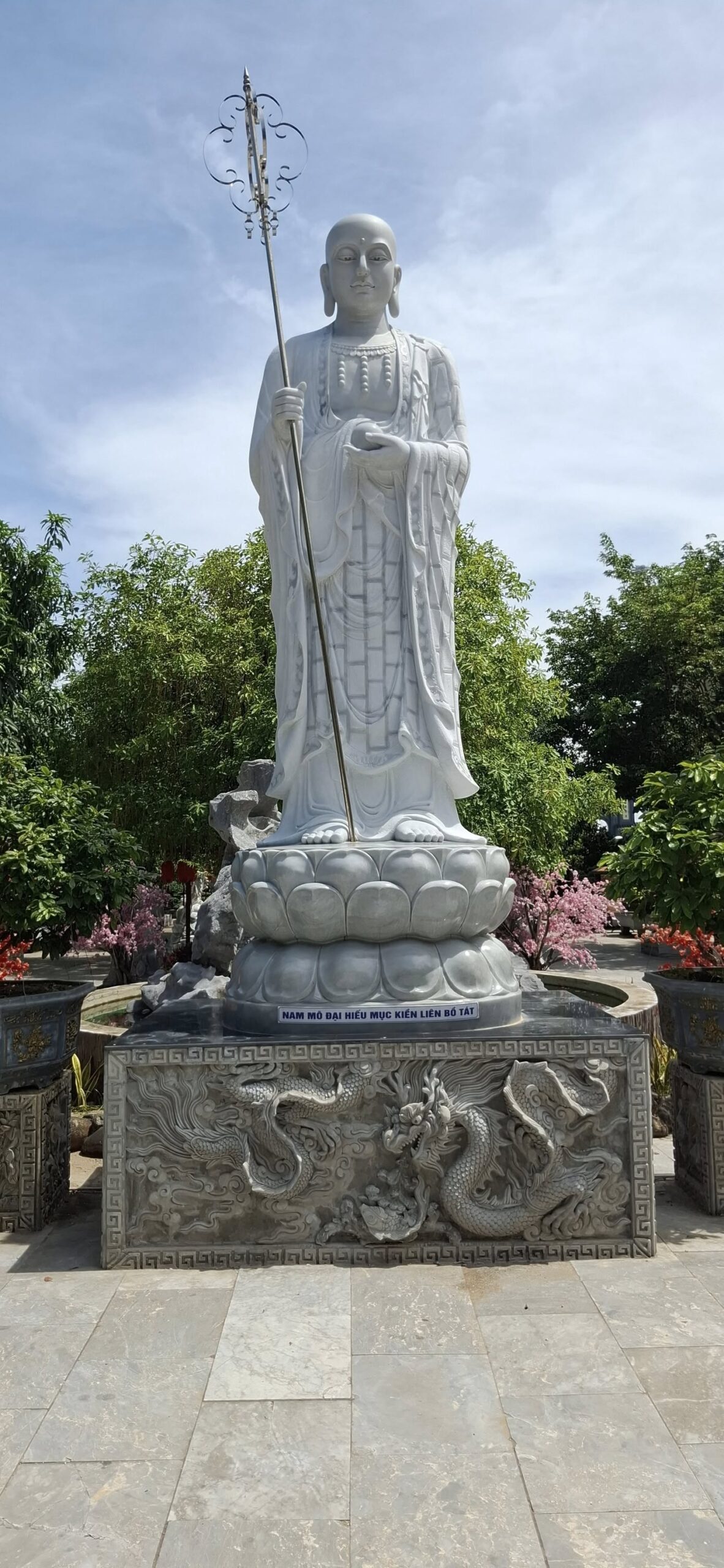
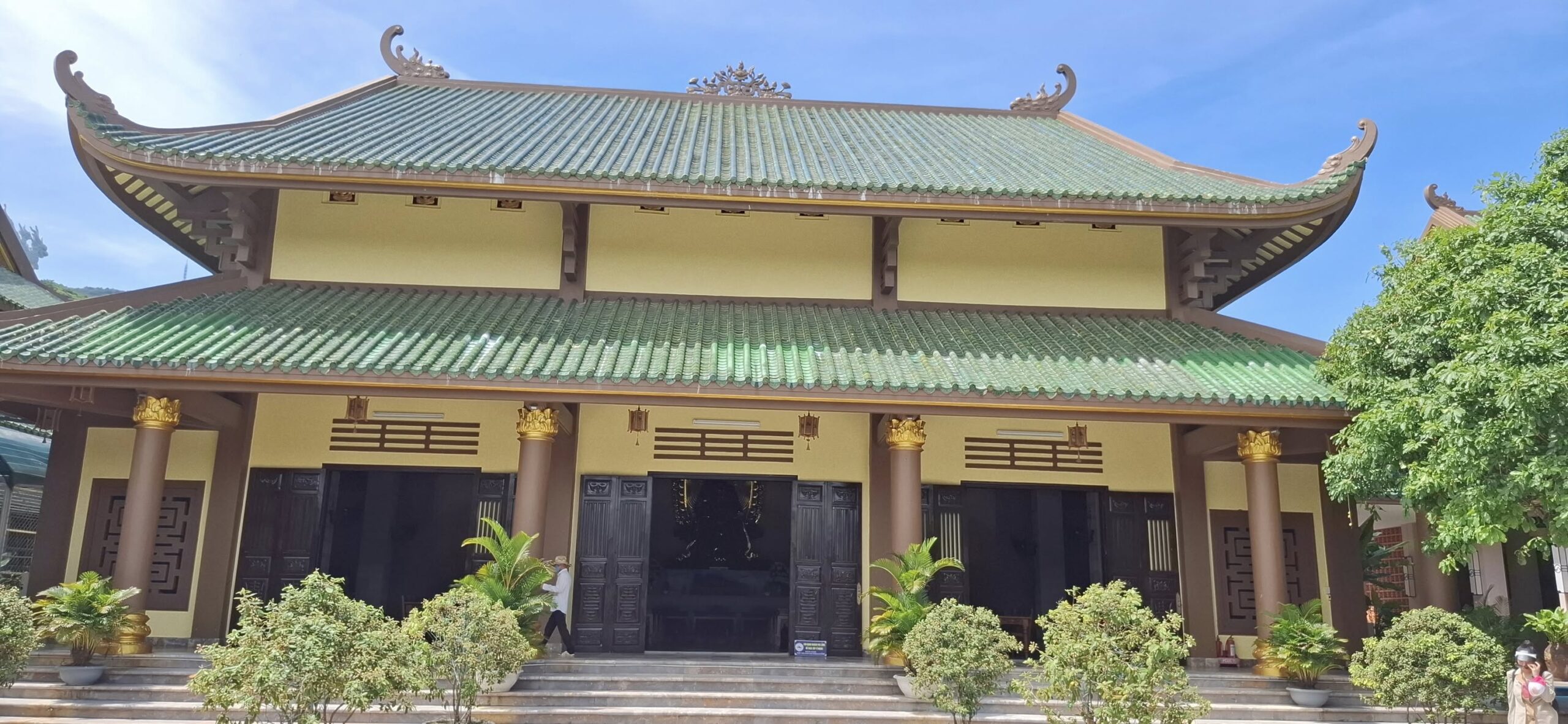
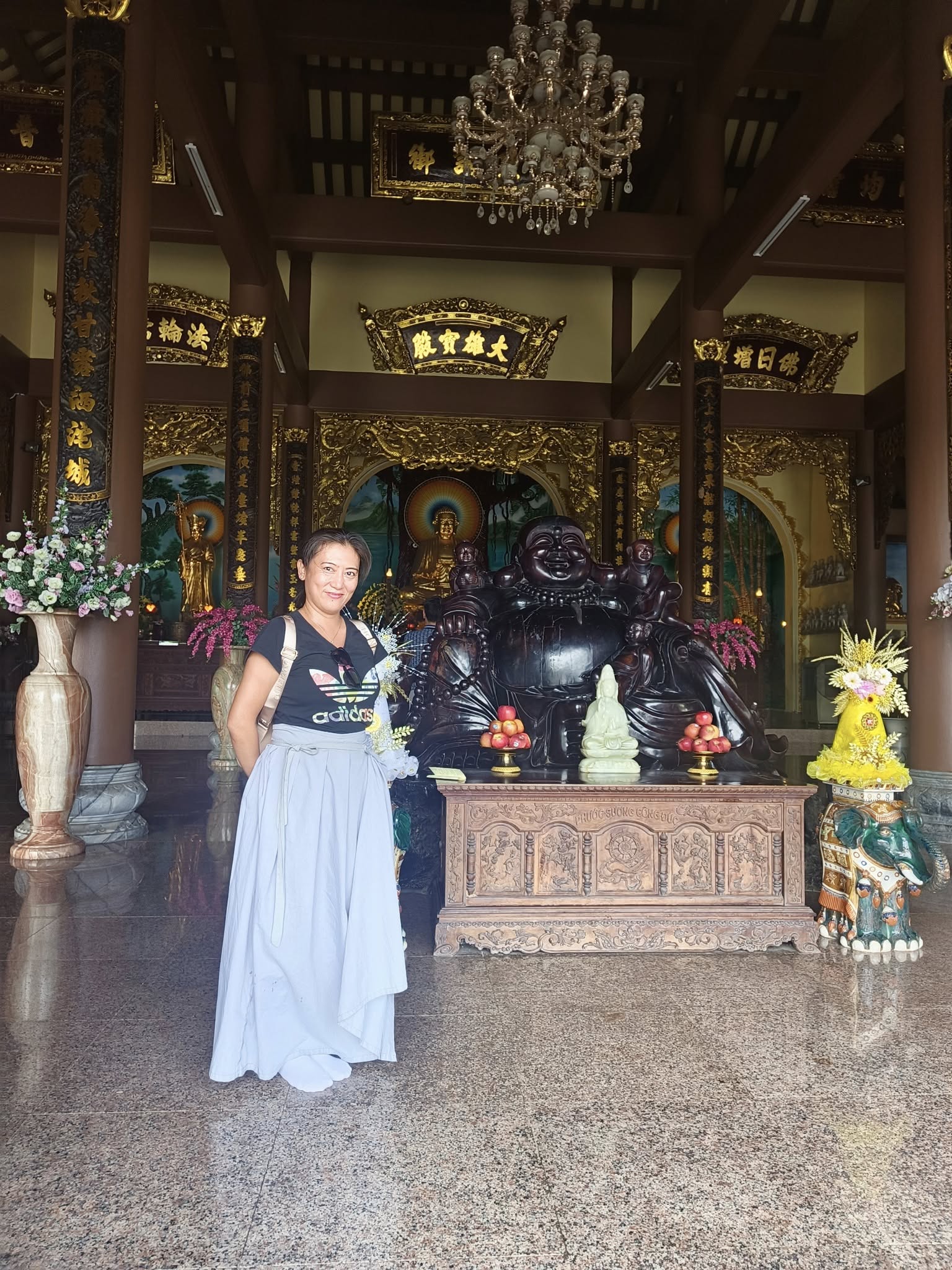
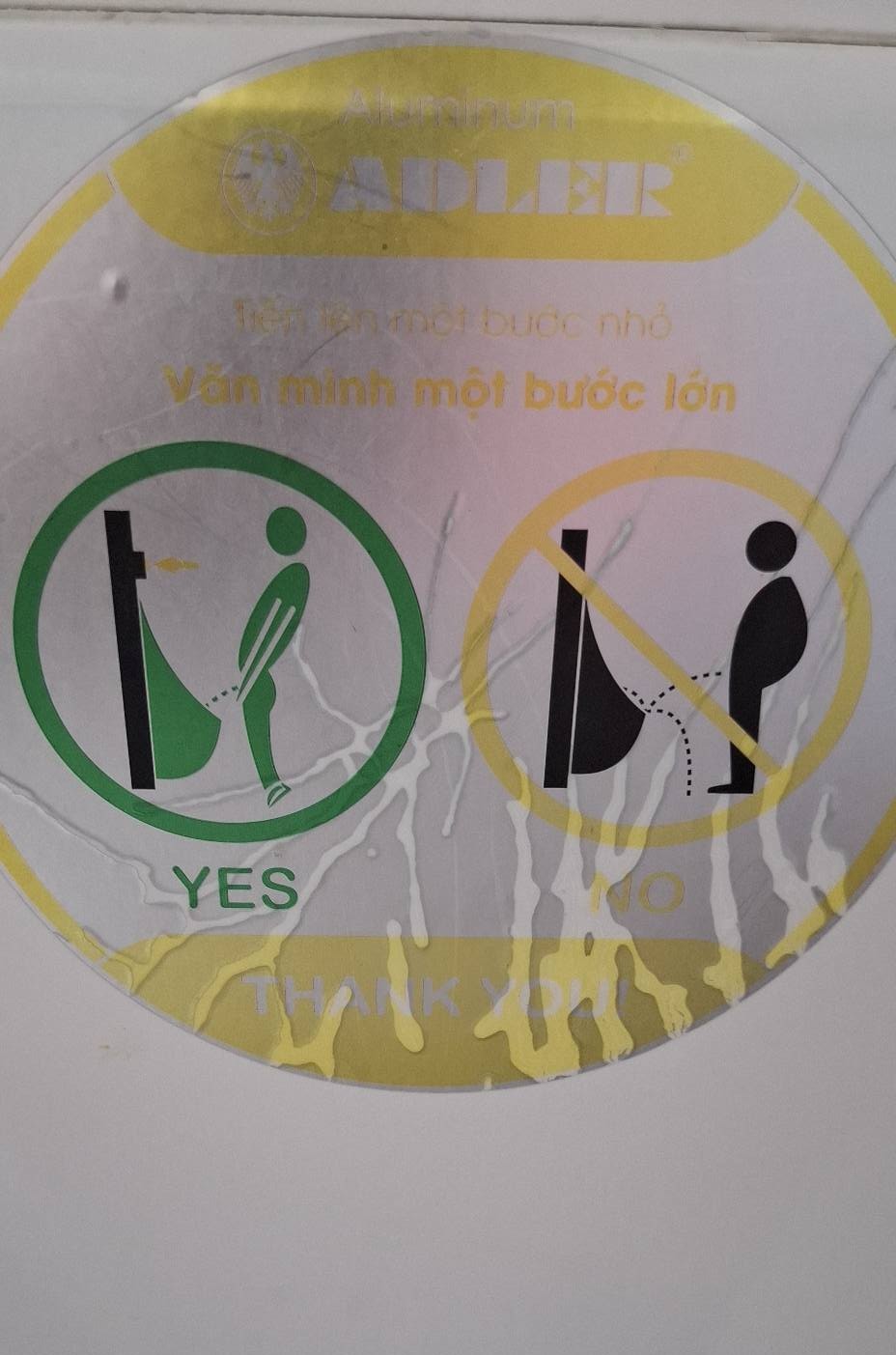
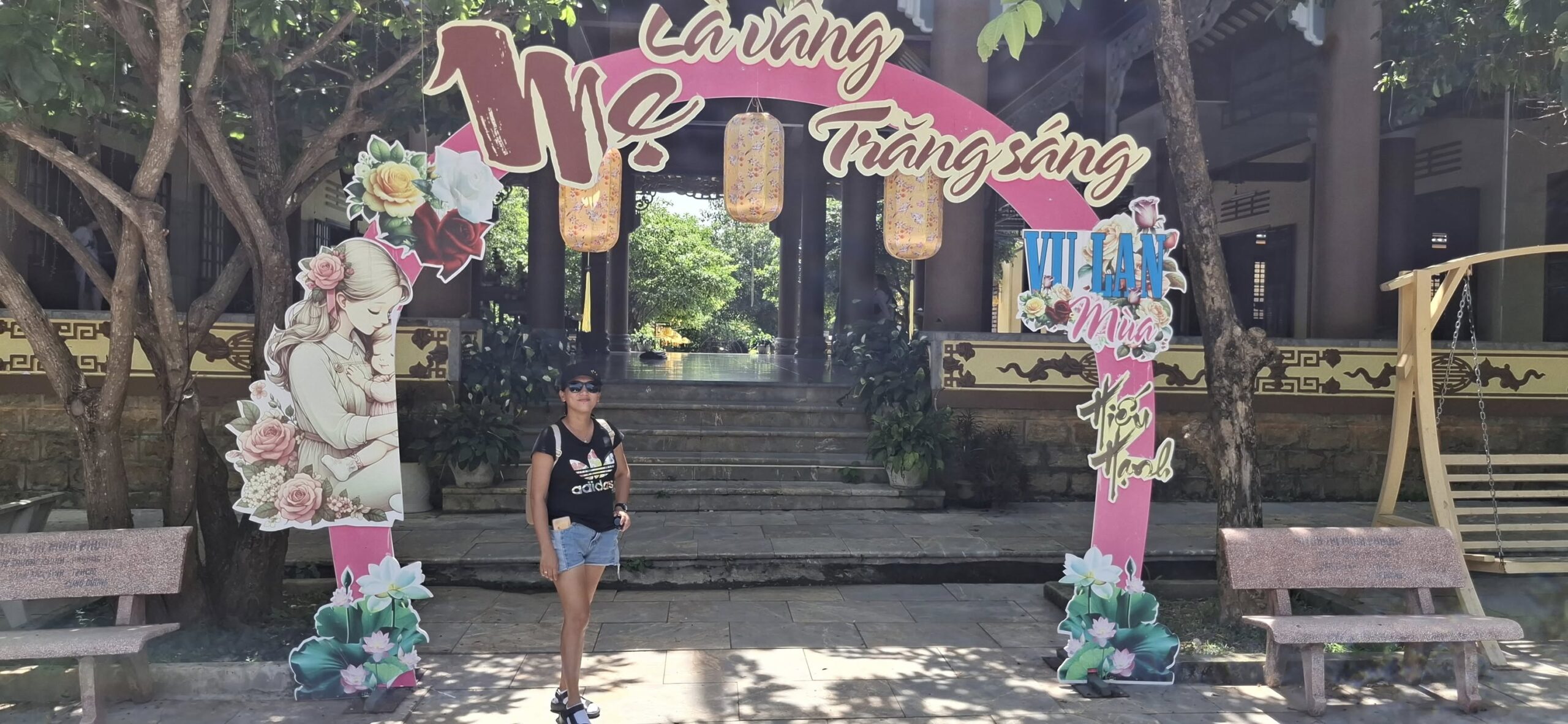
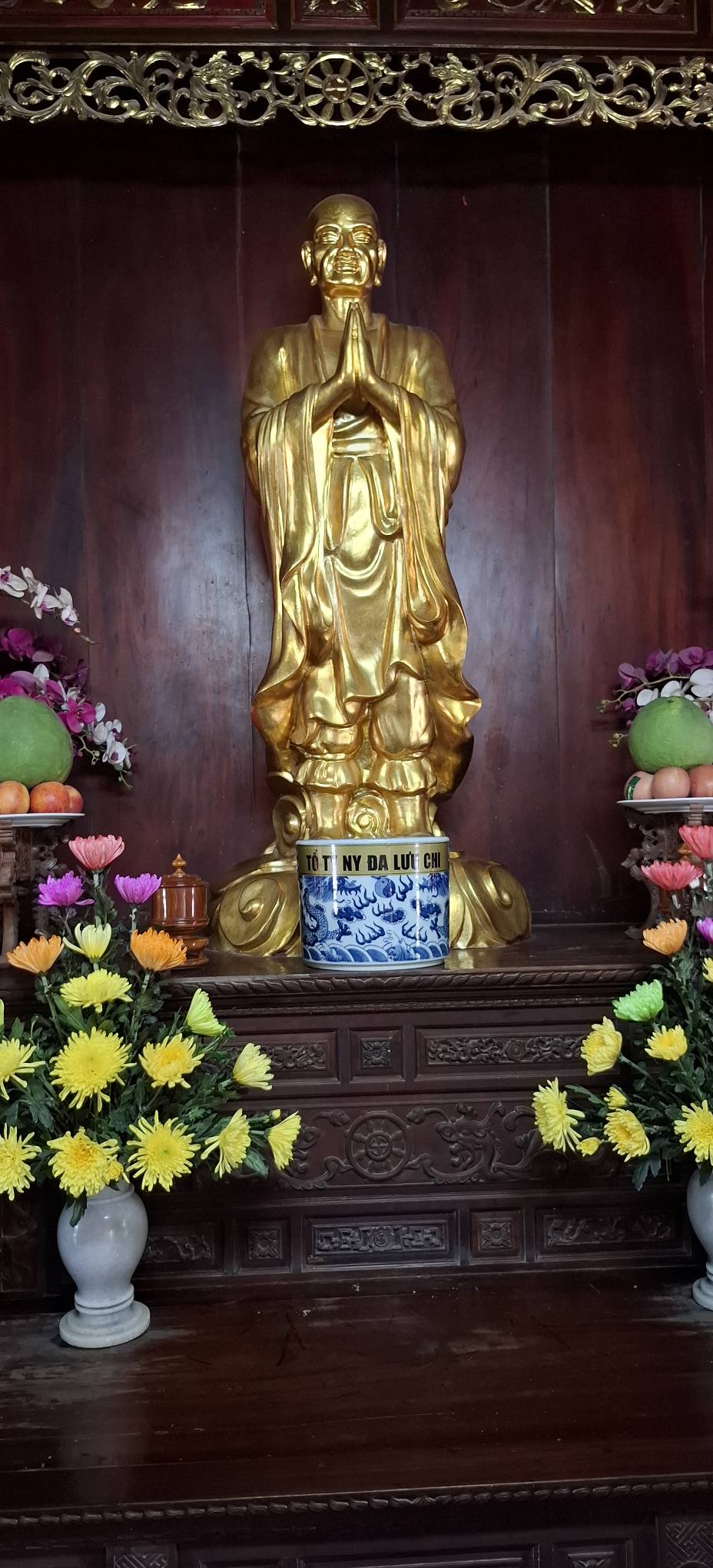
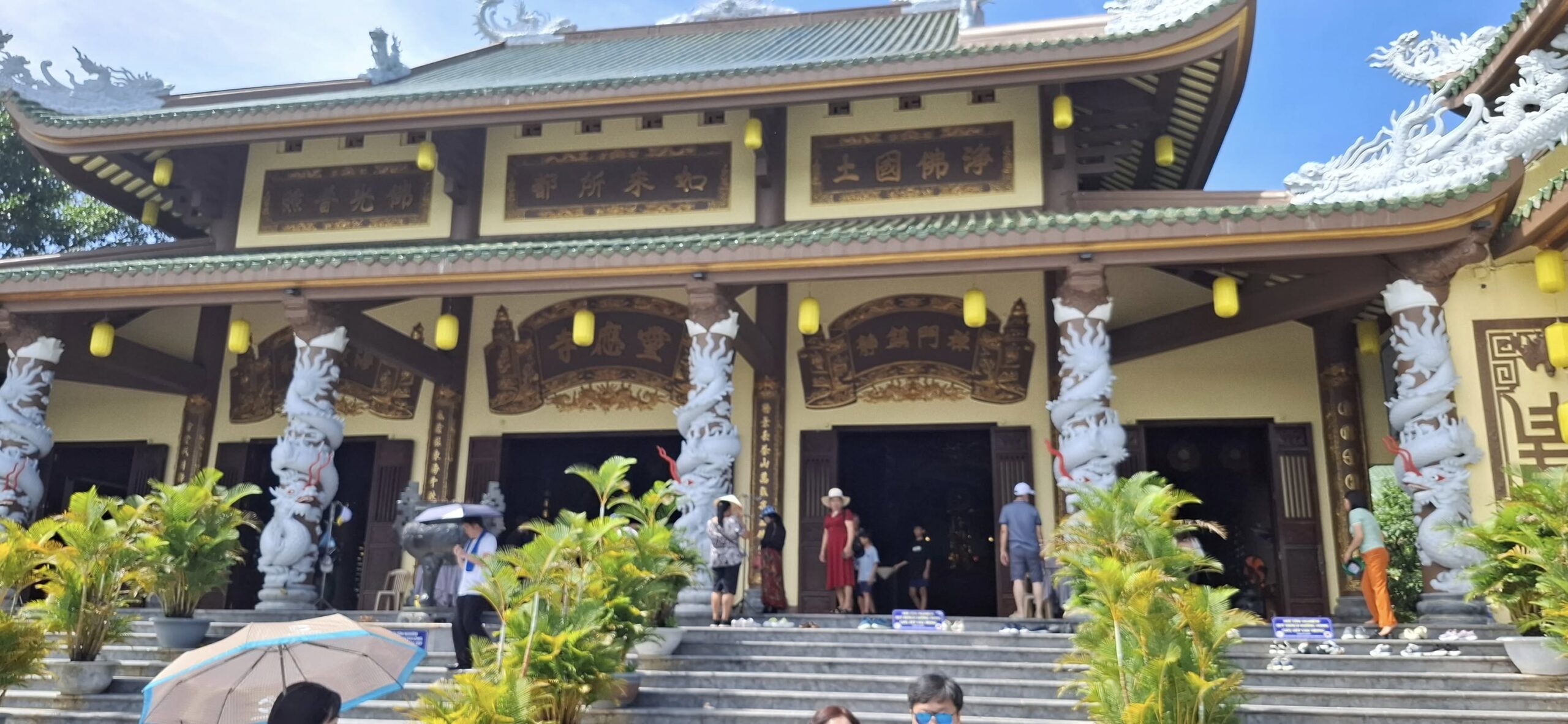
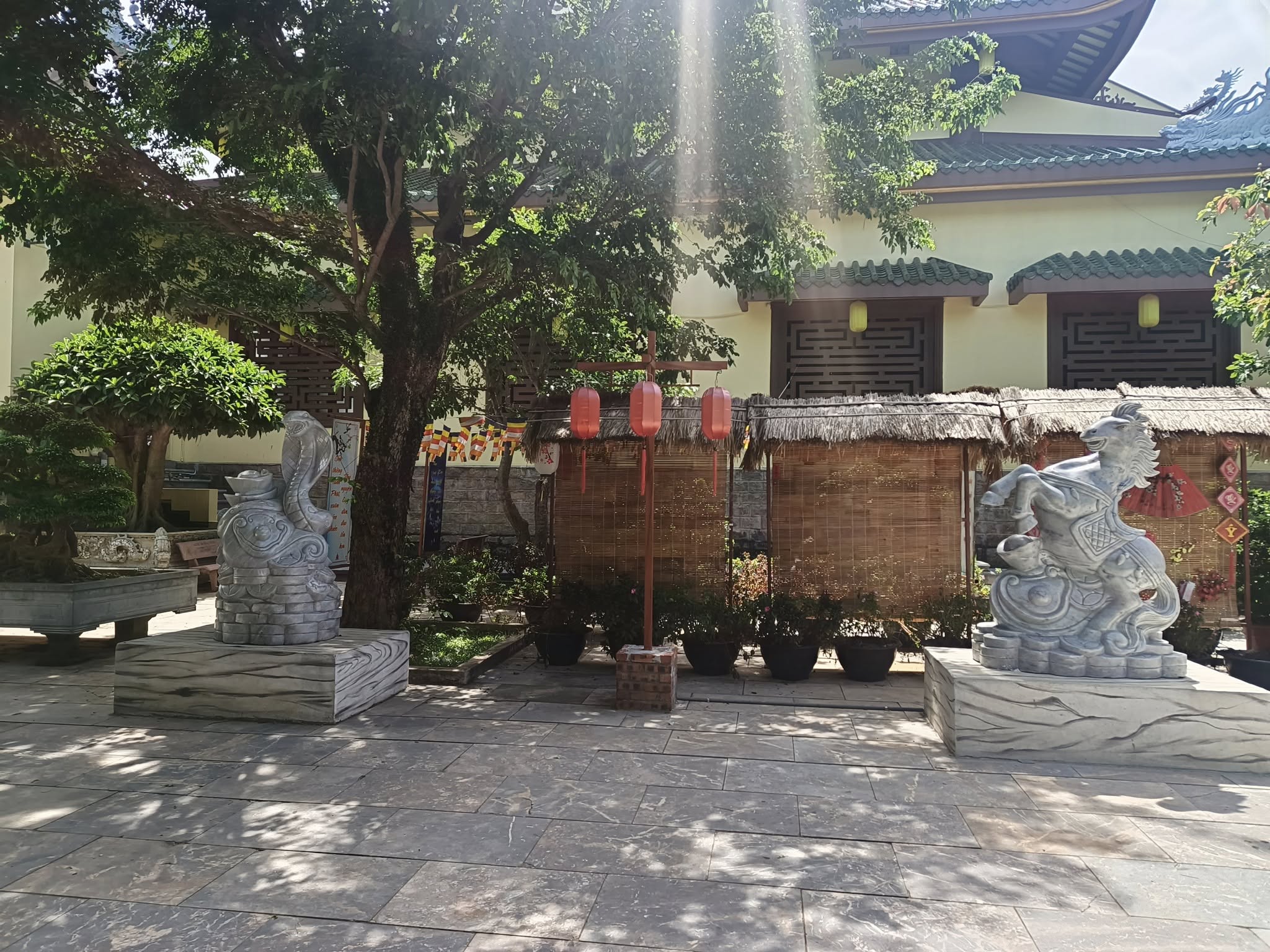
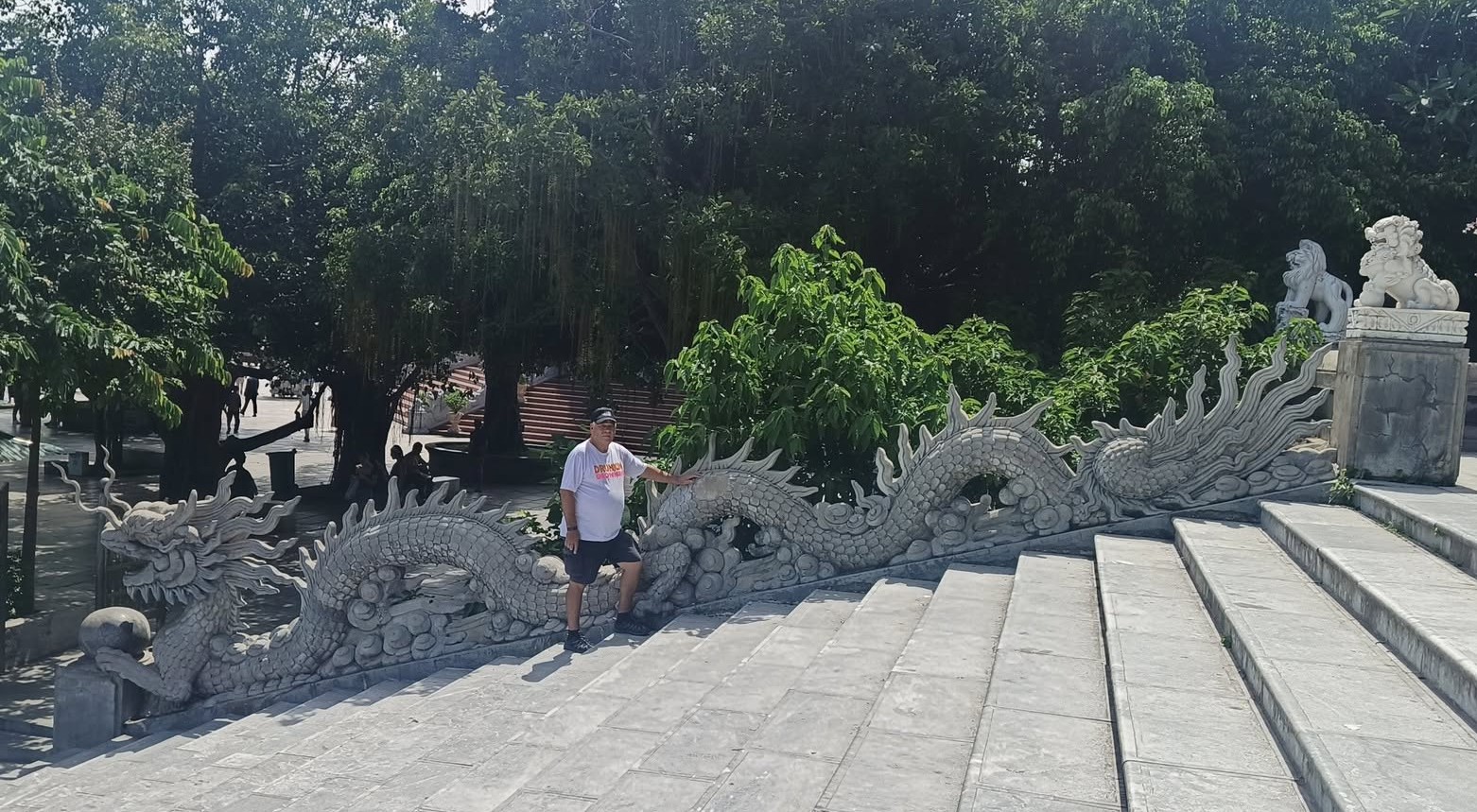
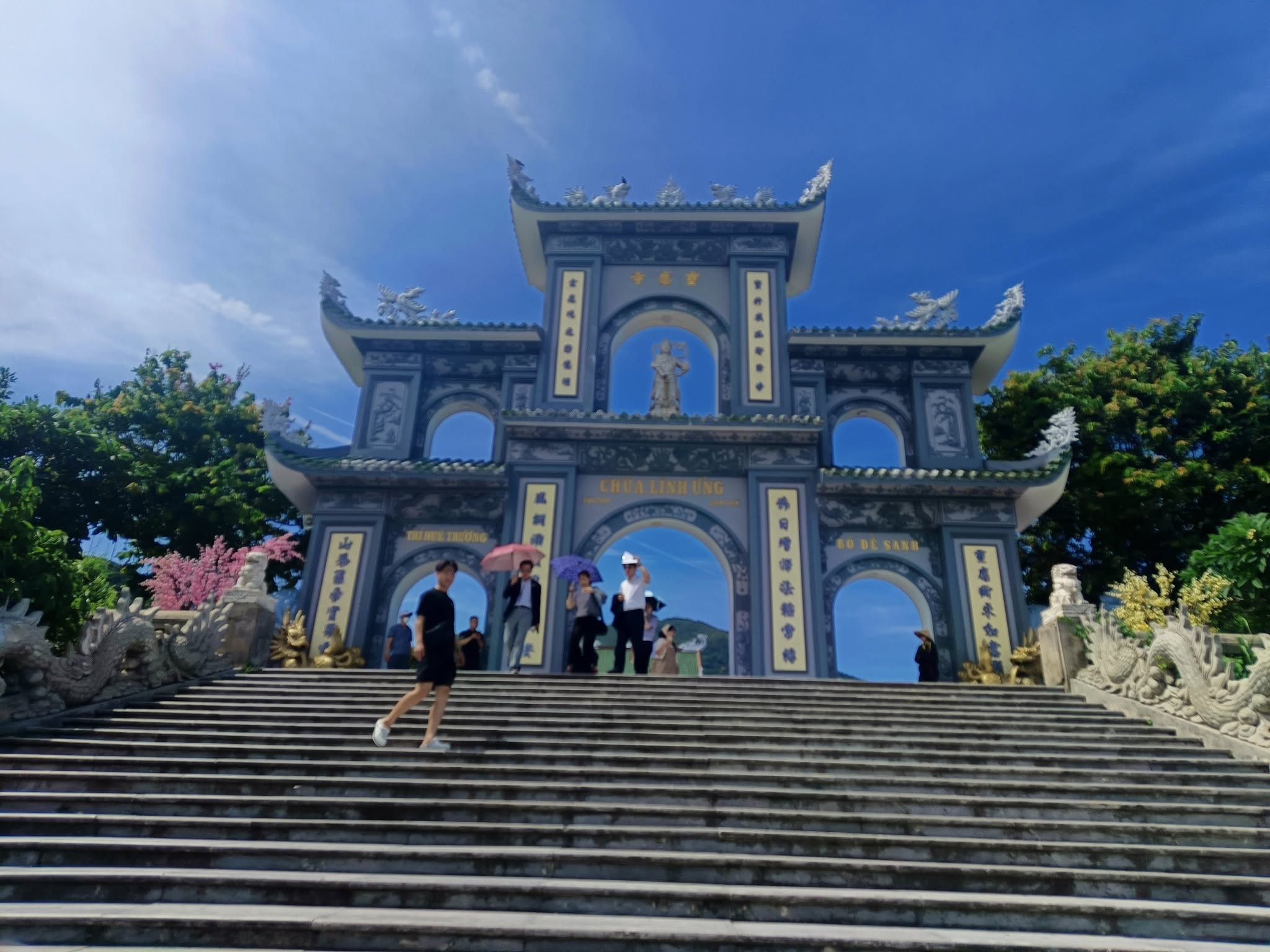
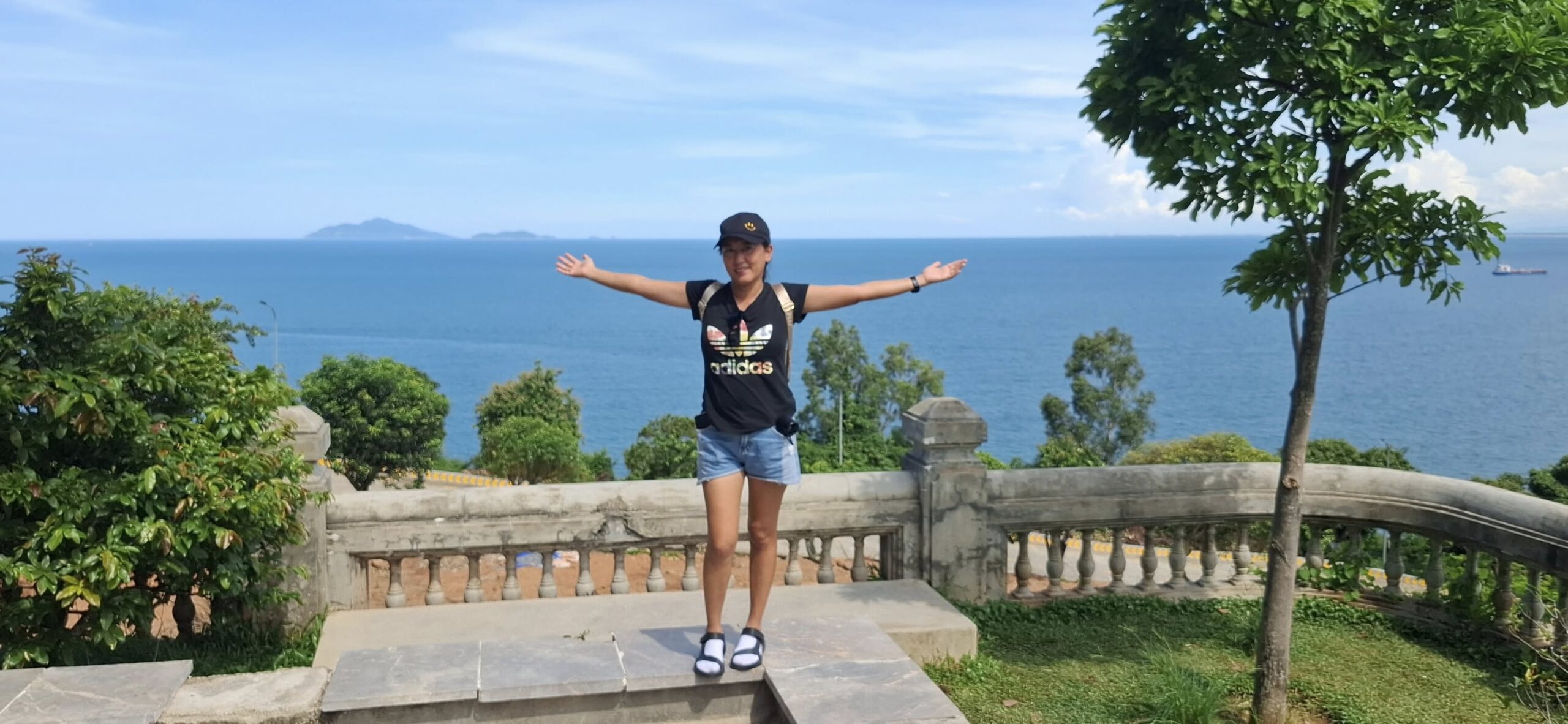
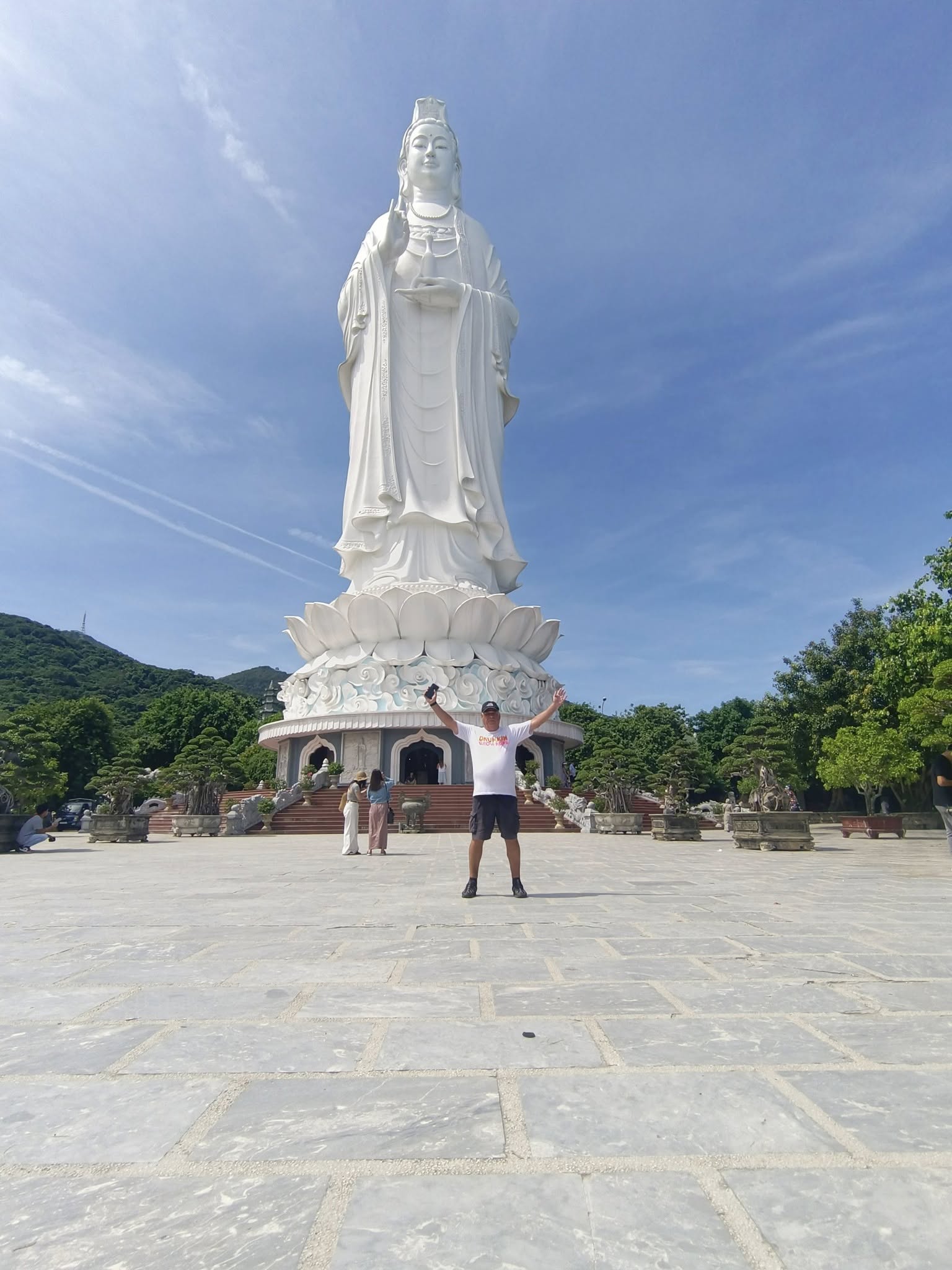
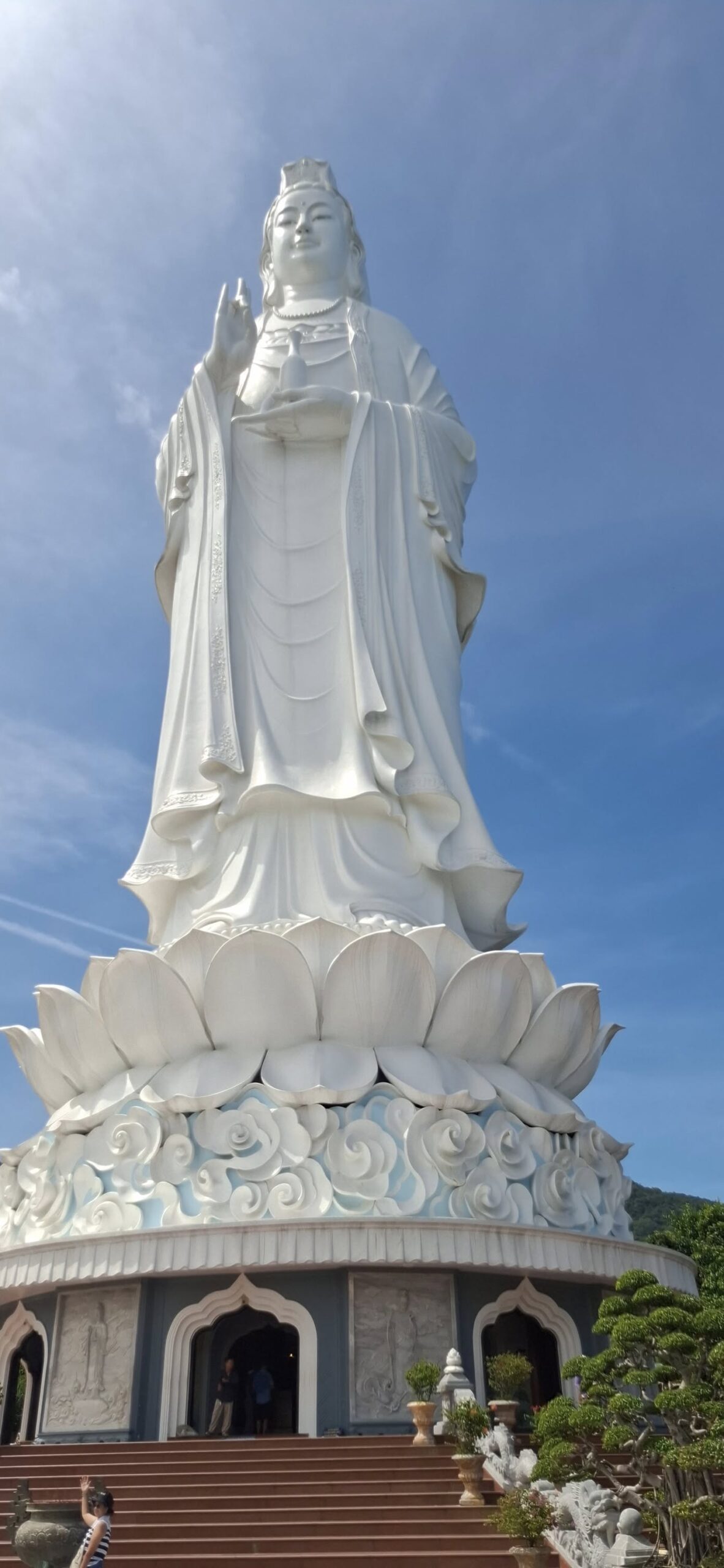
So, that was our tour of the Lady Buddha. I was very impressed, even as a non-believer. I’d visited several temples in Korea with my Buddhist wife, but they didn’t resonate with me the way this one did.
On the drive back to town, our driver told us about a place we might like to visit for a meal named Dirty Fingers. He said when an American friend first invited him, he found the name off-putting and didn’t want to go. But once he was convinced to give it a try, he really enjoyed the food. It’s about a 2K hike from our hotel, so after some rest, we headed out for some exercise and nutrition. The walk took us away from the touristy district, and there was a more laid-back vibe to enjoy.
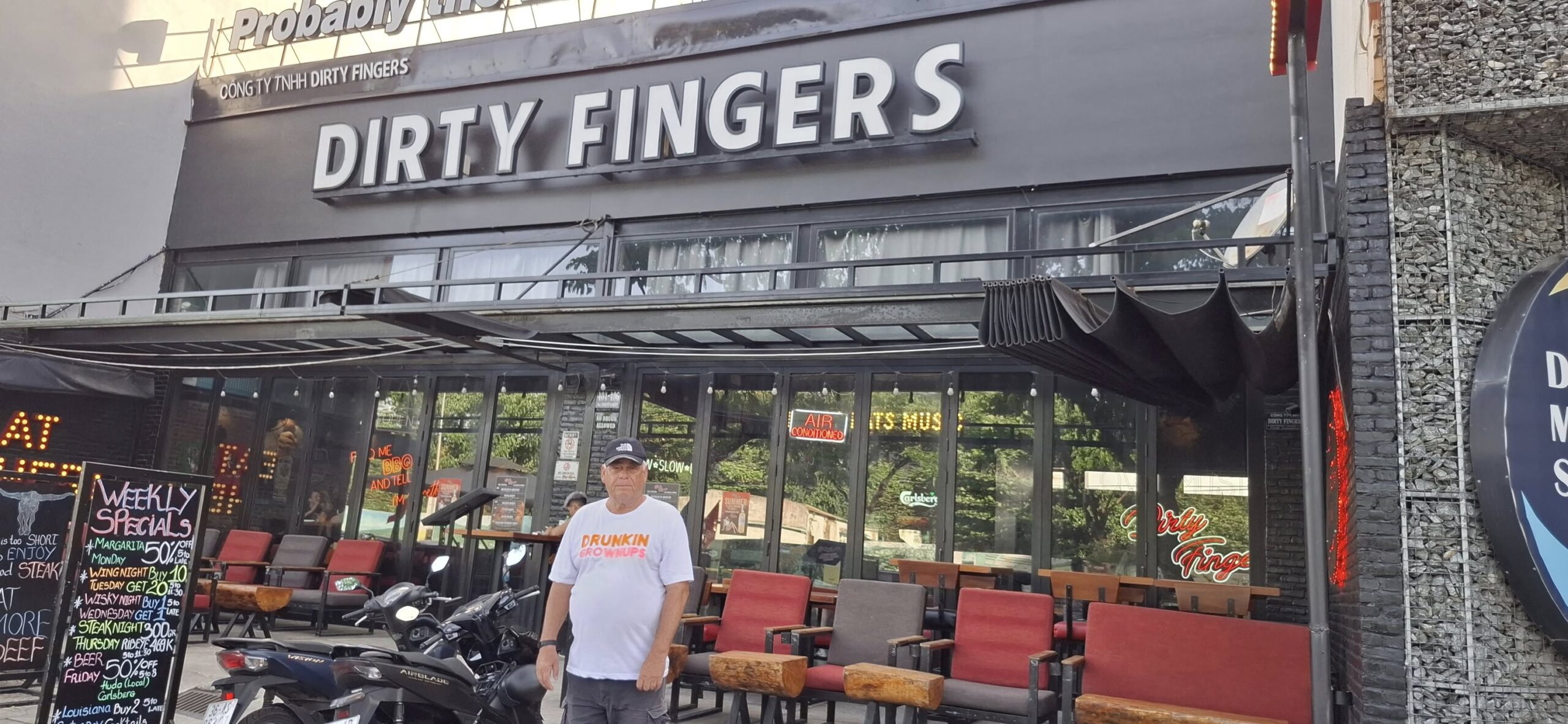
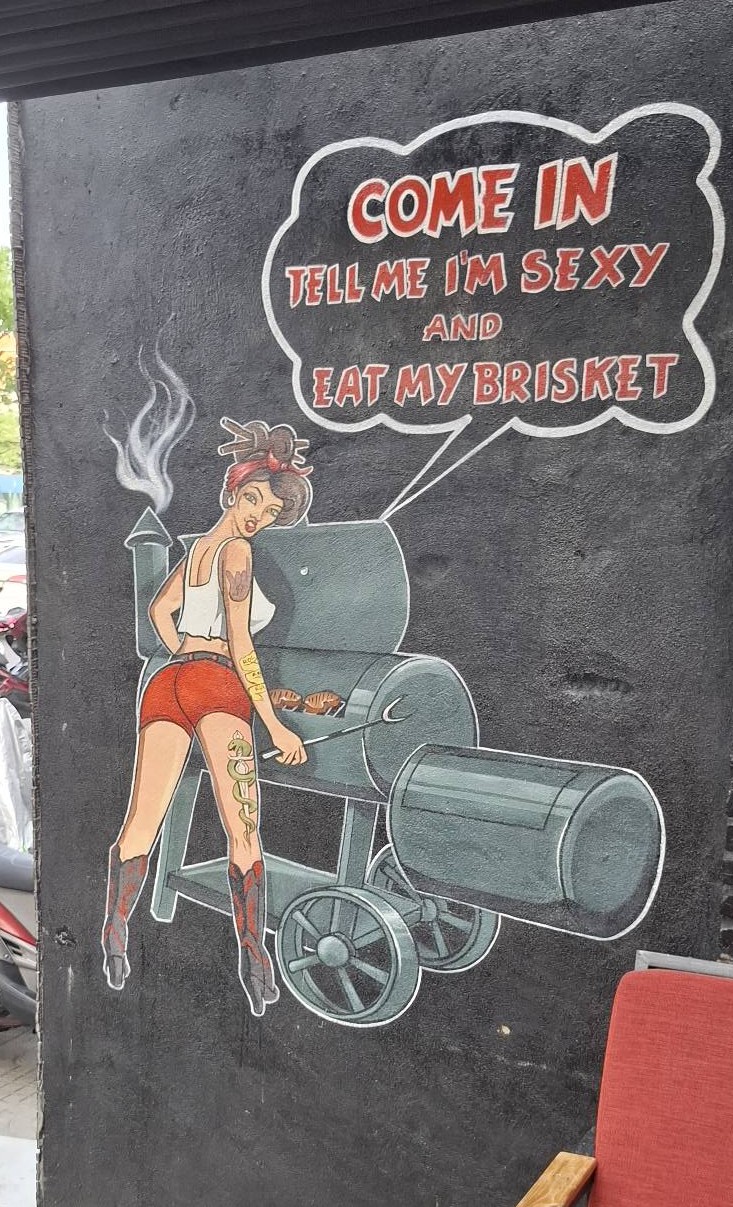
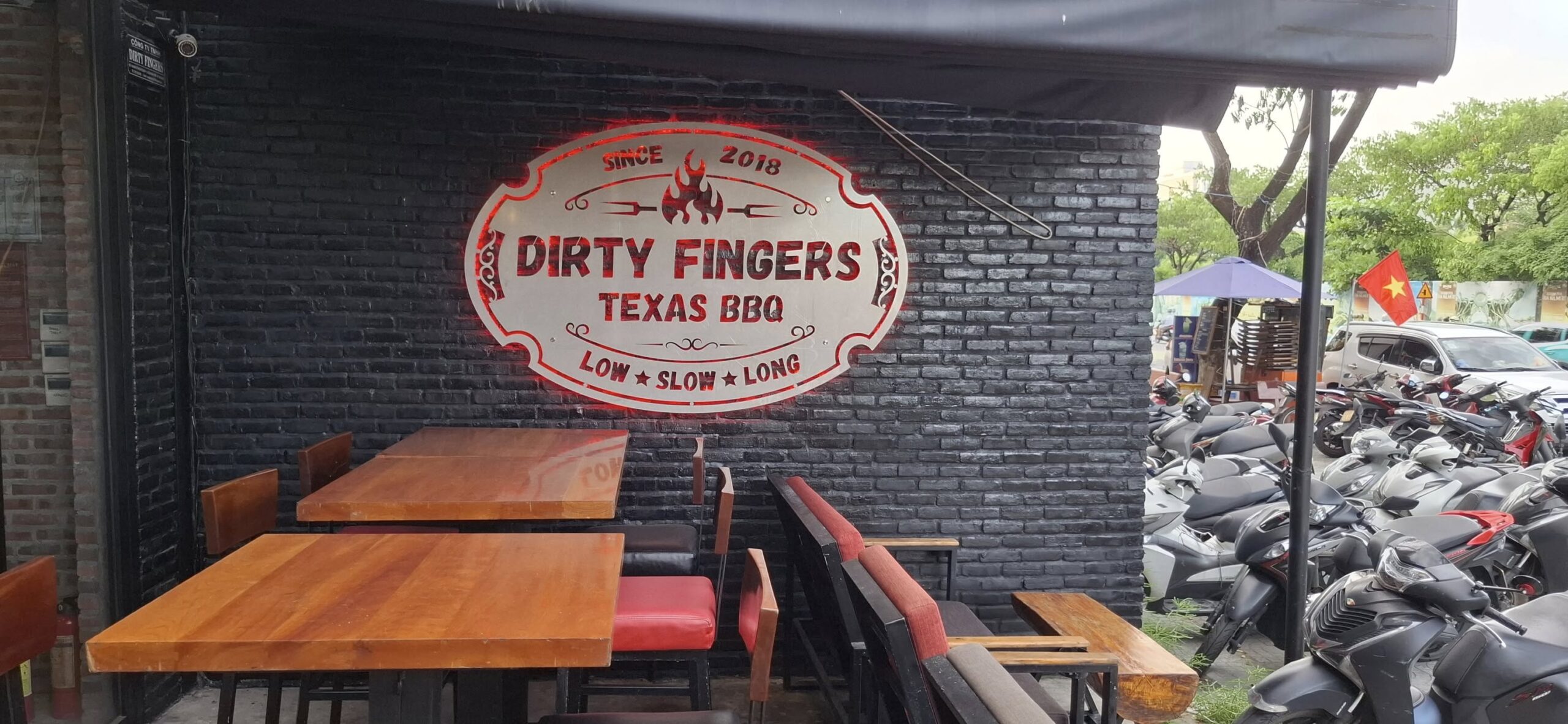
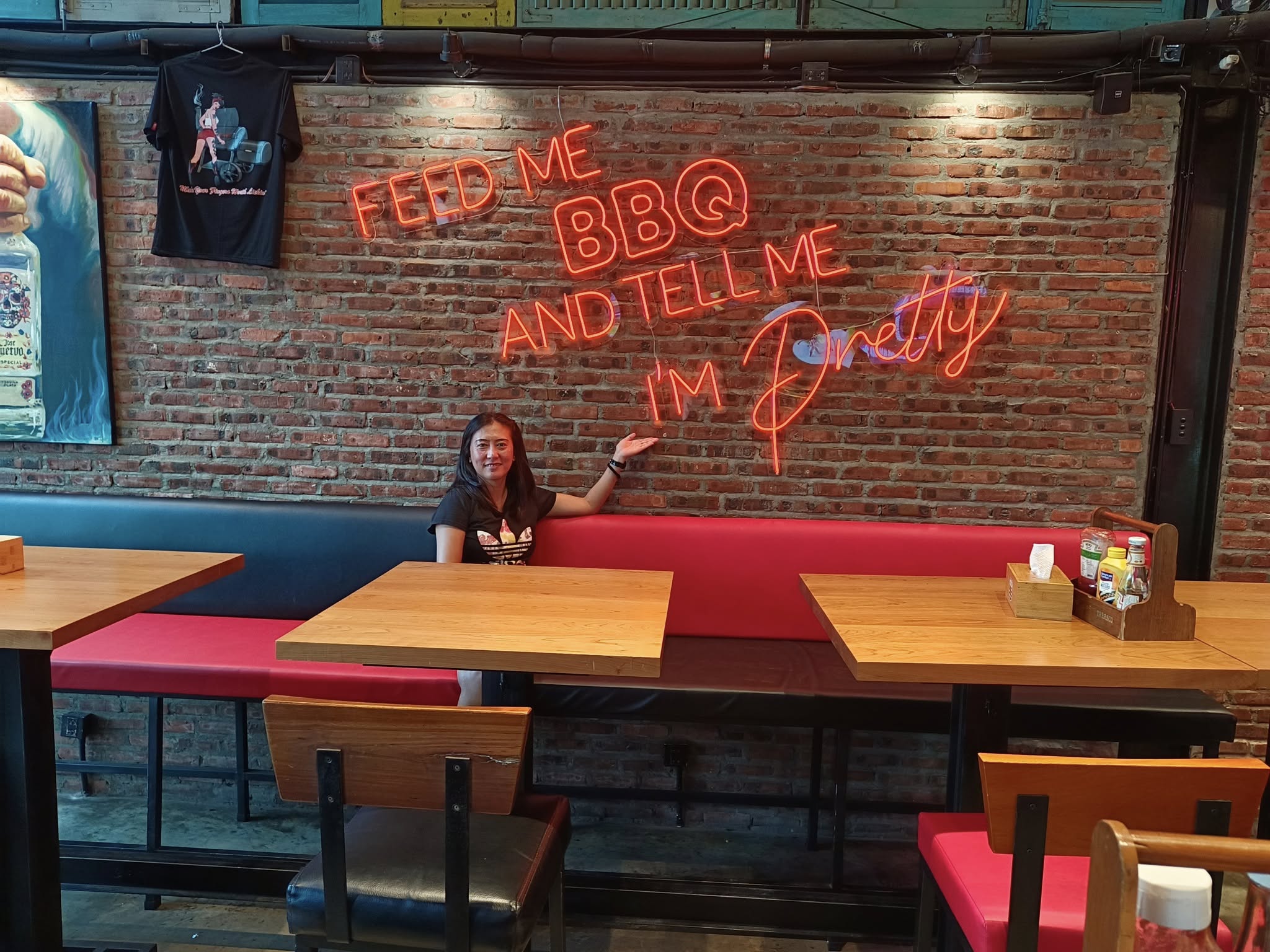
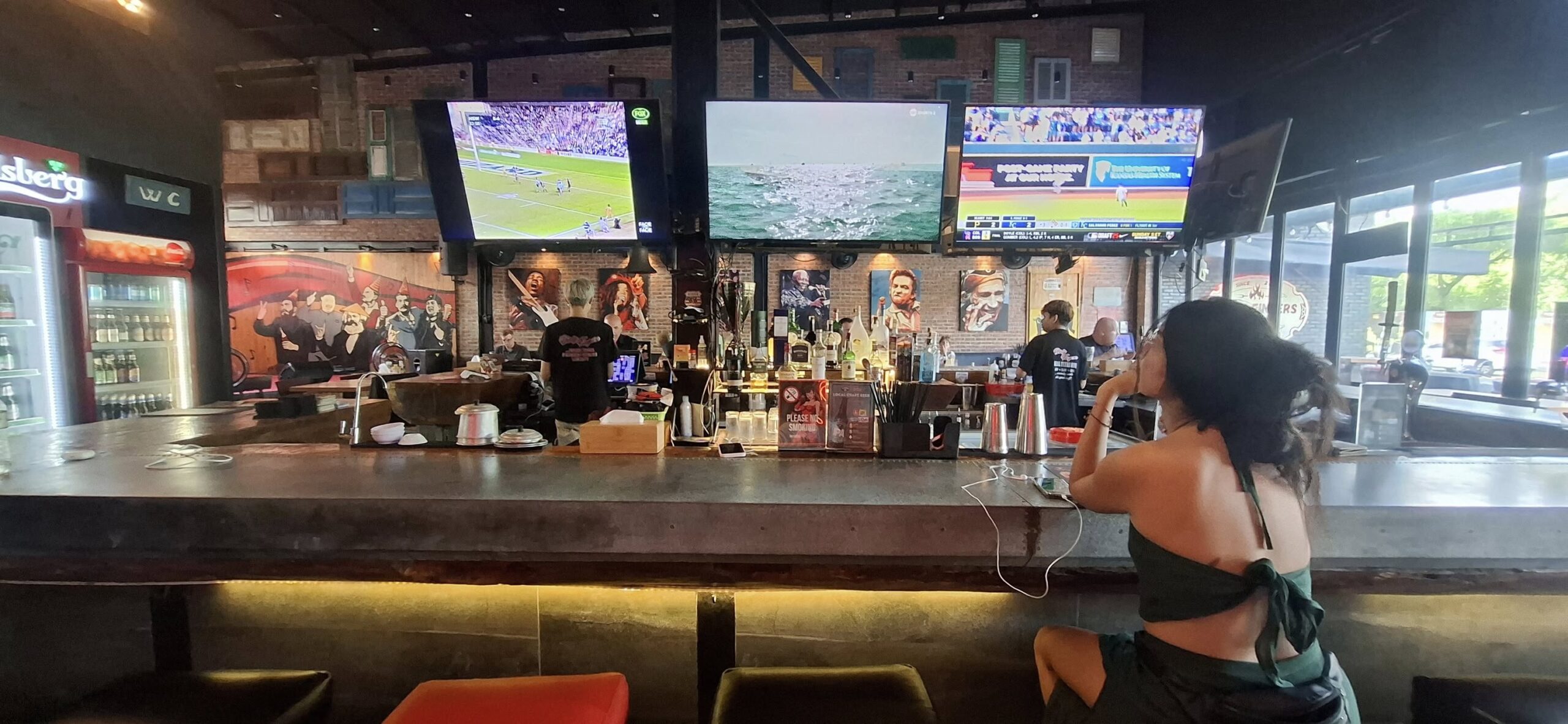
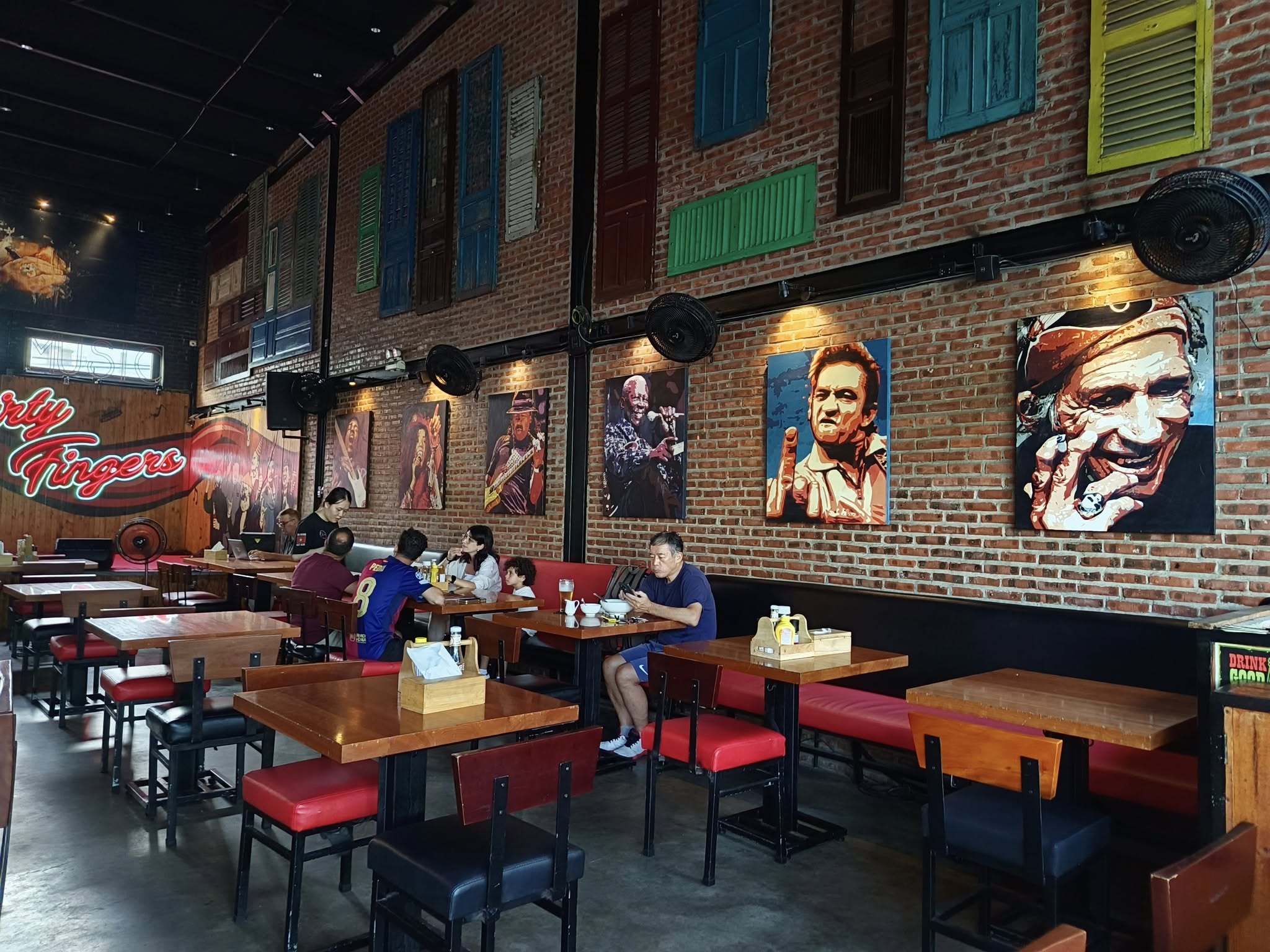
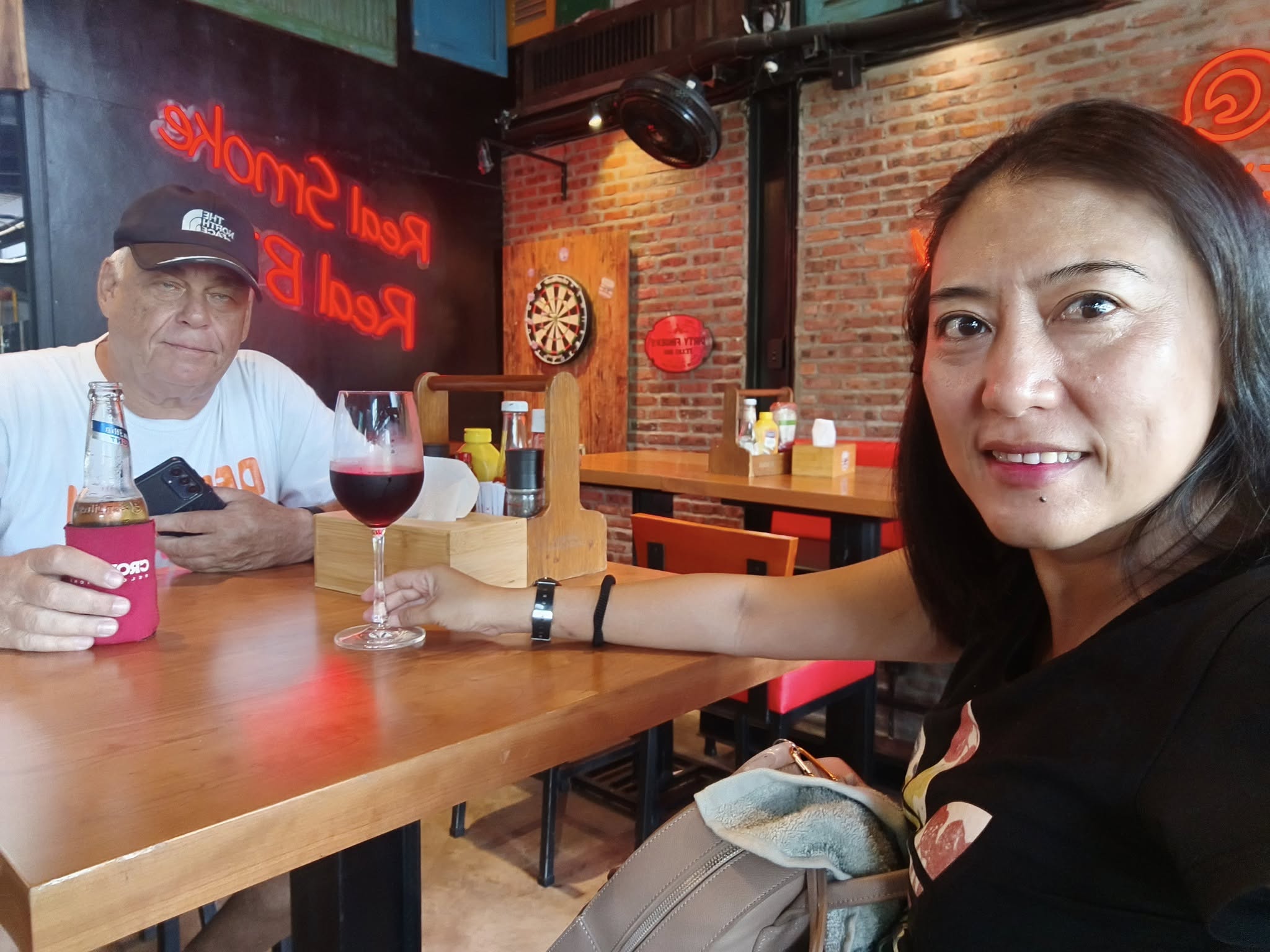
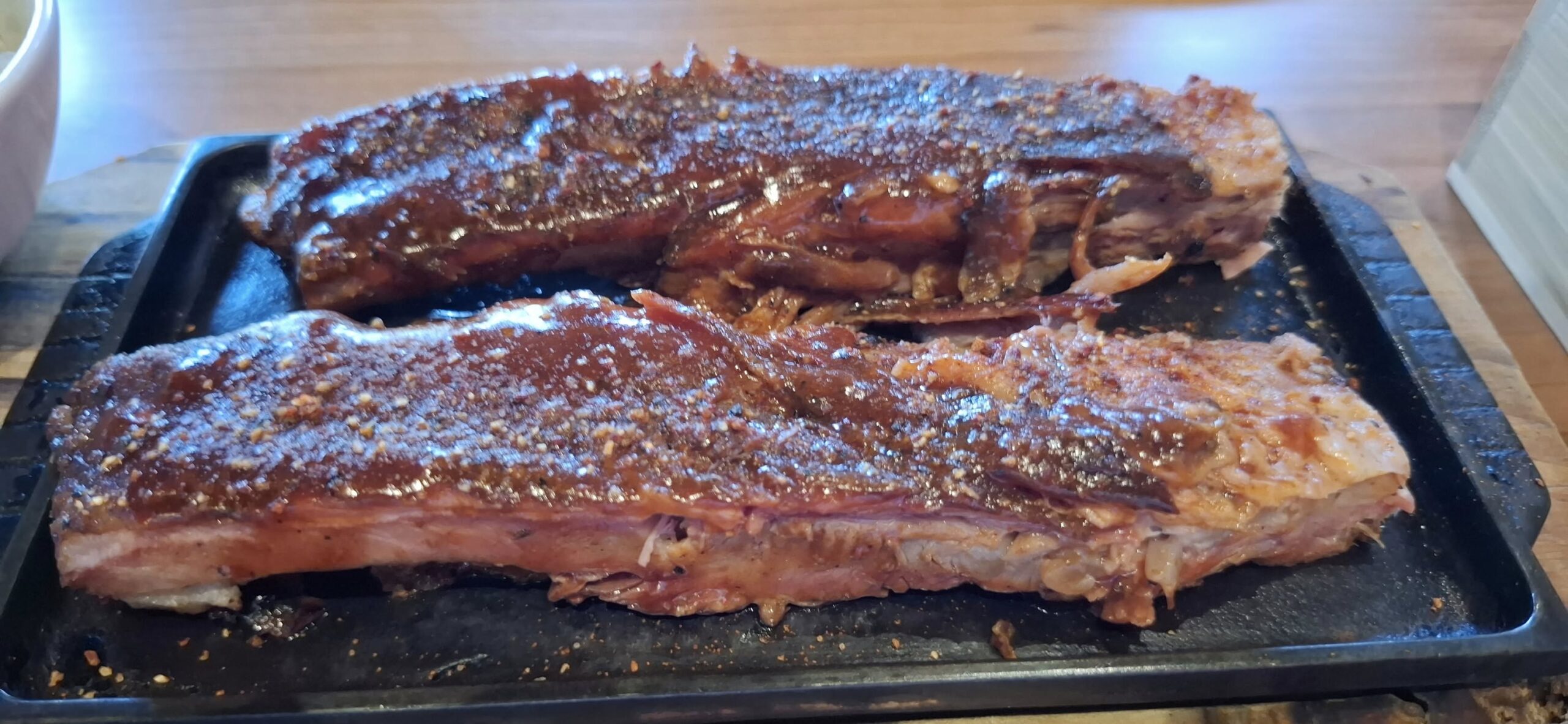
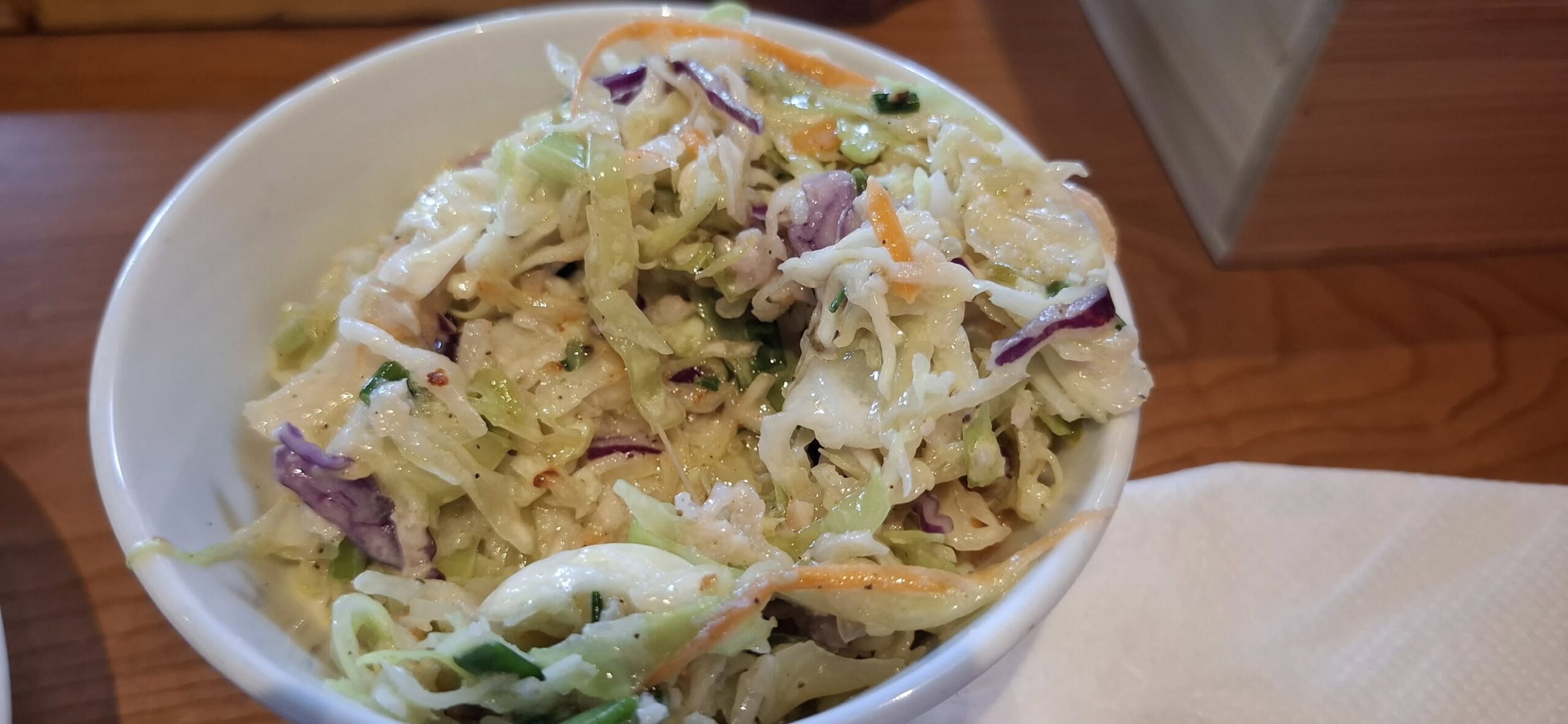
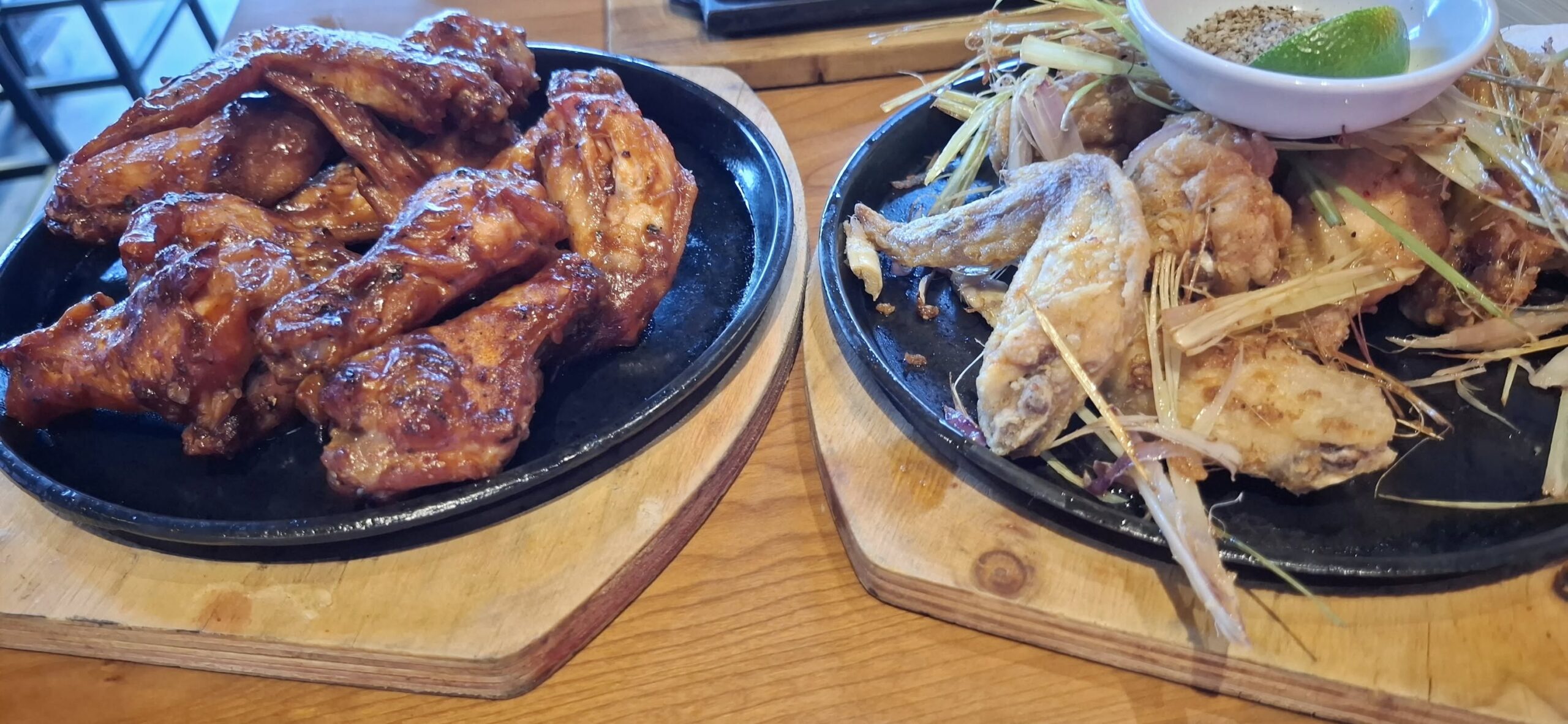
We ordered pork ribs and chicken wings. While we waited for the food, the owner of Dirty Fingers came by our table to introduce himself. Scott is an American who hails from Louisiana originally. We had a very nice chat, and he’s another reason I’d enjoy being a regular here.
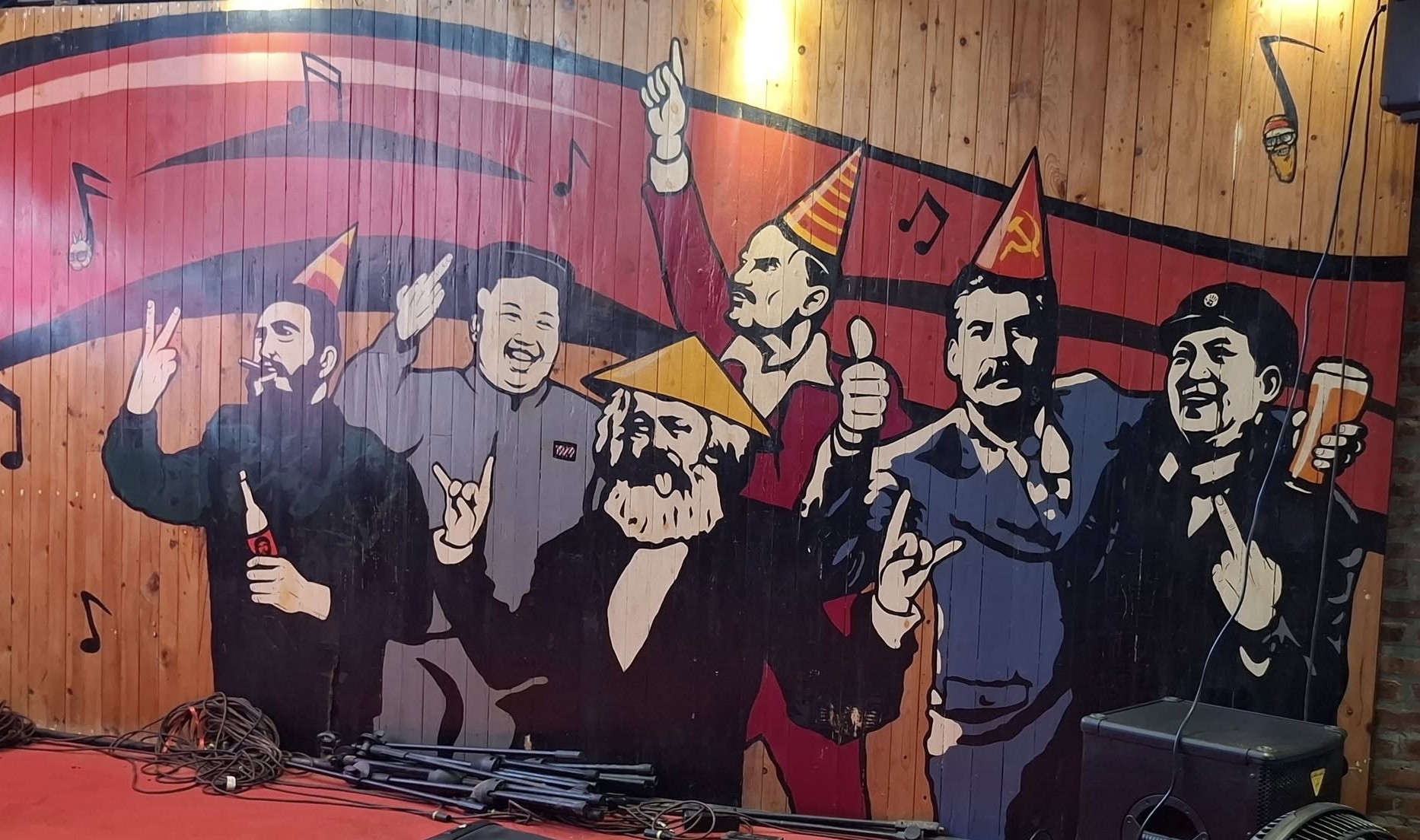
Owner Steve saw me admiring the artwork above and told me it had earned him a visit from the authorities. The complaint was that the figure wearing the traditional Vietnamese hat (the non-la) was mocking Ho Chi Minh, the founder of communist Vietnam. Steve explained to the powers that be that the figure was Karl Marx, and no disrespect to Mr. Minh was intended. At first, they were not convinced, and Steve was prepared to replace the non-la with a clown’s hat, but the authorities relented, and that modification didn’t happen. Ah, the joys of living under an authoritarian regime.
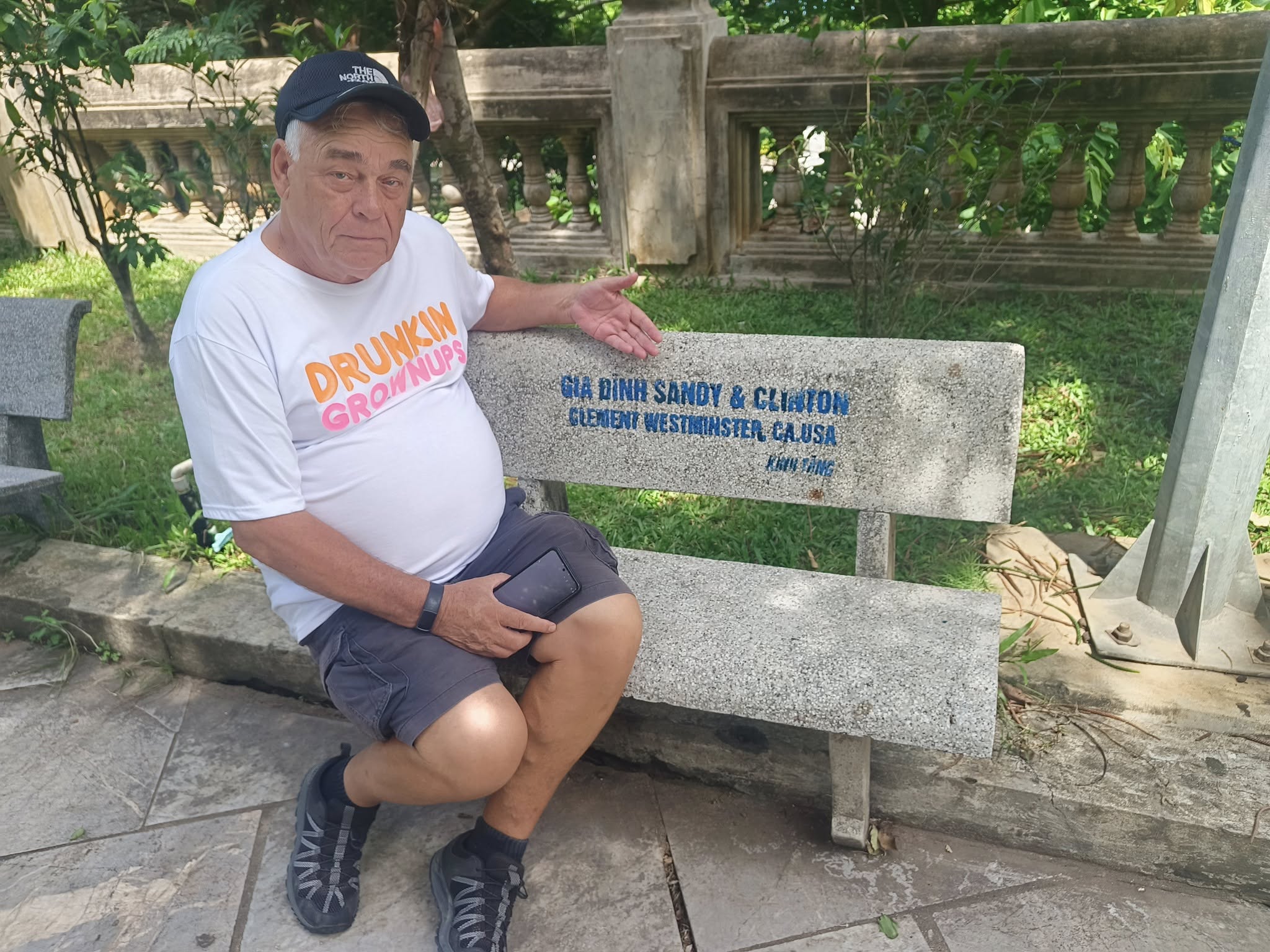
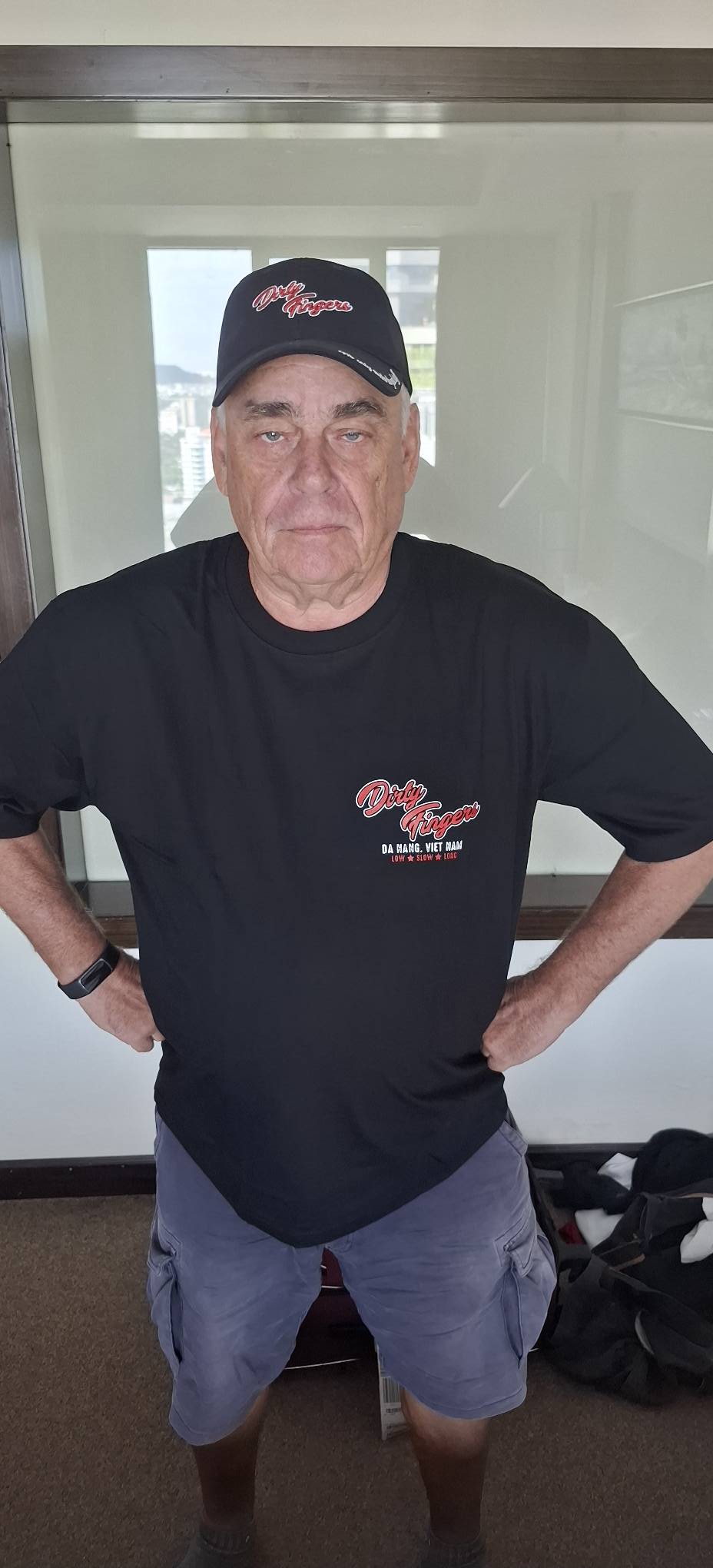
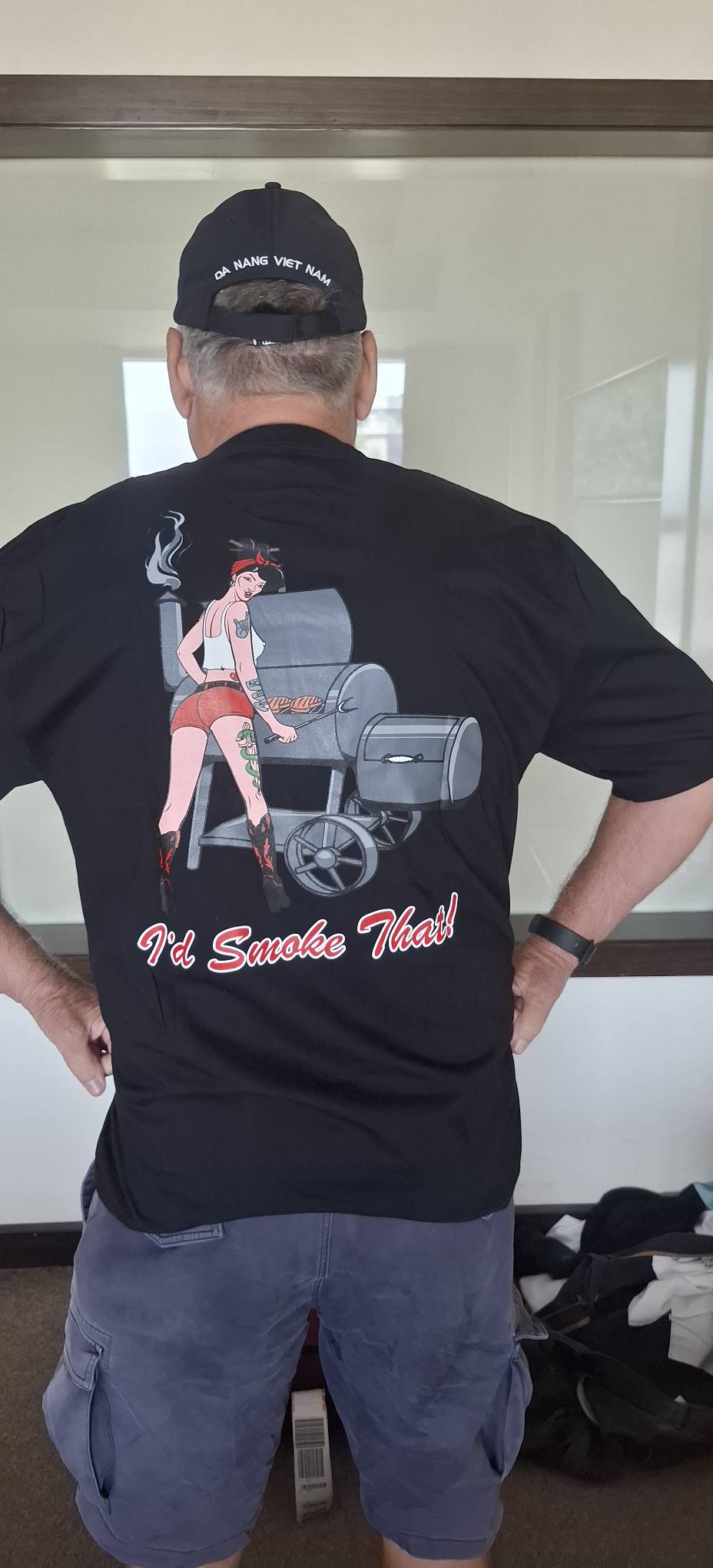
As we finished our meal, Steve complimented my “Drunken Grownups” t-shirt, saying it had taken him a while to catch the Dunkin’ Donuts reference. He mentioned he had hats and t-shirts for sale, and I jumped at the chance to acquire souvenirs from my pleasant visit to his establishment.
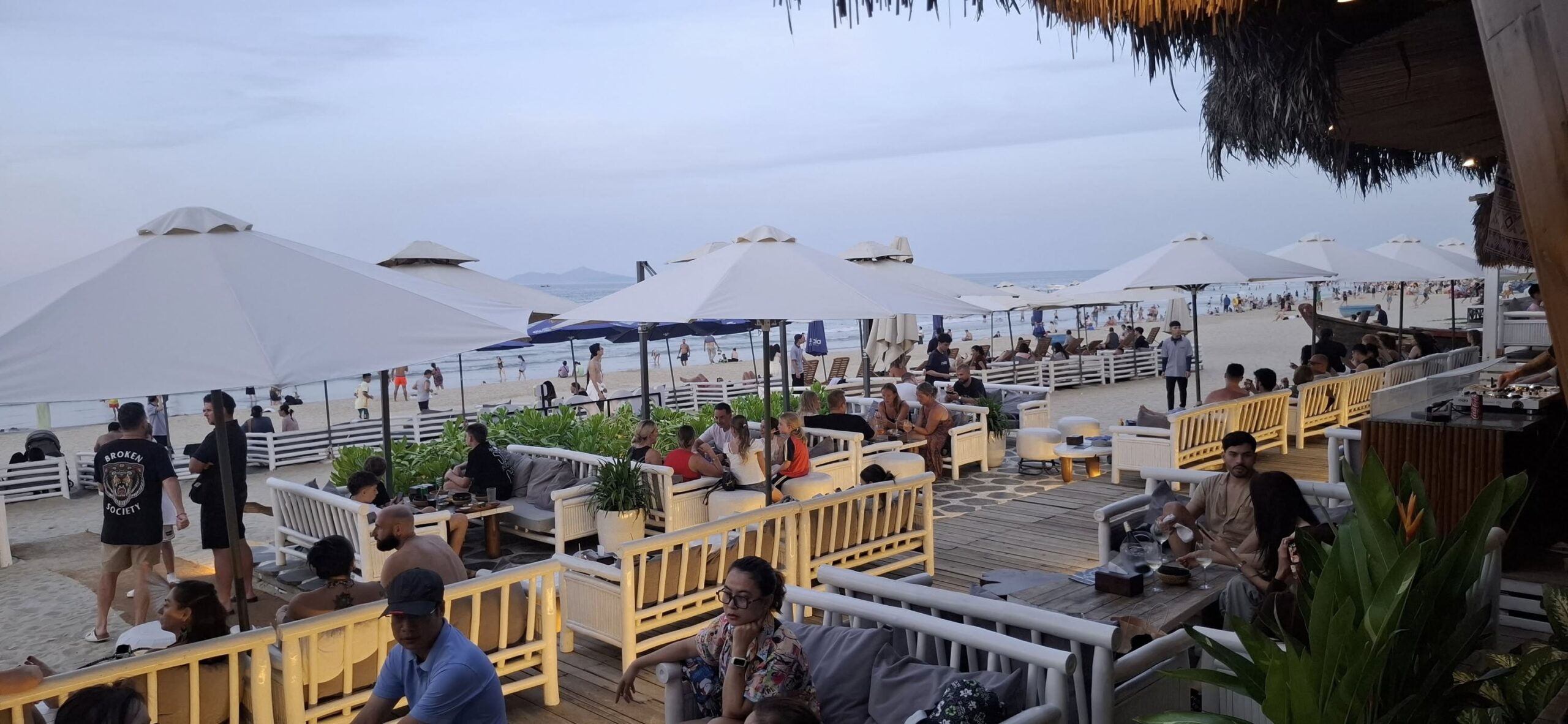
As we made the post-meal trek back to our hotel, we stopped for a nightcap at the Maia Beach Bar.
We made it an early night and got rested up for today’s adventures at the Marble Mountain and the city of Hoi An. I’ll tell you about that tomorrow. Now it’s time to head out for dinner, and yes, I have a lead on a place serving Vietnamese food.
[Attempt #2 after correcting a typo. Dammit.]
A huge buffett
So that’s “buffett” as in “Jimmy Buffett” and not “buffet” as in, well, buffet.
From our perch, I put the camera on zoom mode and grabbed a shot of Lady Buddha.
While most of Southeast Asia practices Theravada Buddhism (the older form), Vietnam is largely Mahayana (such as is found in China, Korea, and Japan). I’m guessing that “Lady Buddha” may be a local version of what Koreans would call “관세음보살/Gwanseum-bosal,” or the bodhisattva of compassion.
[Ah—my guess is right. Google AI says the Lady Buddha is, in fact, Quan Âm, the Buddhist bodhisattva of compassion.]
Shortened to “Gwaneum” in Korea, “Kwanyin” in China, and “Kannon” in Japan, this bodhisattva underwent an evolution from the male Avalokiteshvara in India (“-ishvara” means “lord” in Sanskrit) to the female Kwanyin in China. Kwanyin was already a preexistent Chinese goddess of compassion who got appropriated by the Buddhists when they came to China from India; Avalokiteshvara got mapped onto Kwanyin, thus becoming female while Kwanyin herself transitioned from being a Chinese goddess of compassion to being a Buddhist bodhisattva of compassion, thus switching cosmologies. As an old religion prof of mine used to say, “It’s all syncretism”—something to remember when you hear the huffy PC crowd getting upset over “cultural appropriation.” Cultural appropriation has been happening since forever. It’s very human.
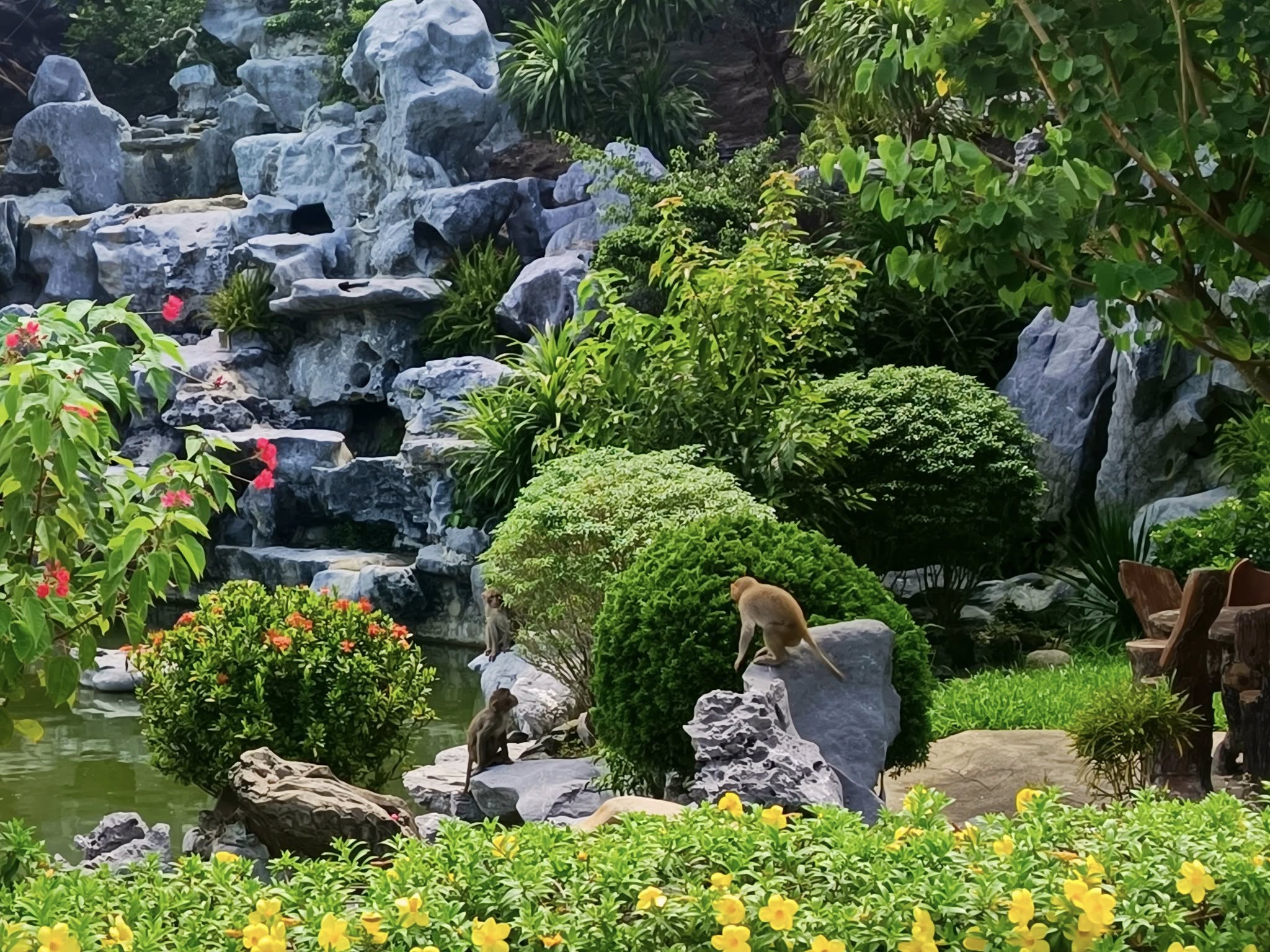
As we neared the temple, we saw these critters monkeying around.
Did any of the monkeys run over and steal food, jewelry, or other items?
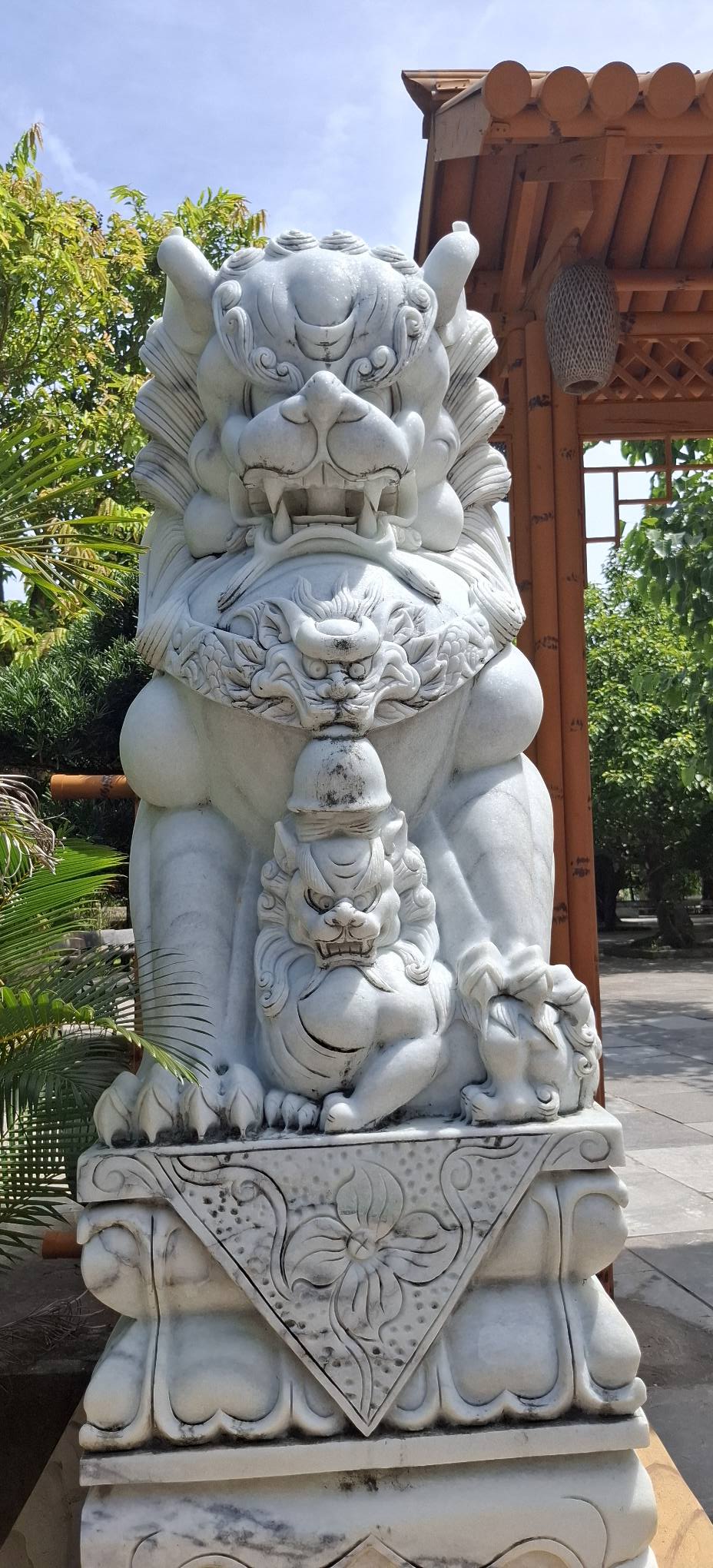
I know next to nothing about the Buddhist religion, but I could appreciate the artwork involved.
That looks like a famous monk, or a Buddhist saint (bodhisattva), holding a vajra (thunderbolt/enlightenment) staff, standing on a lotus-leaf pedestal, with cosmic dragons swimming through the air/water/ether beneath him.
Buddhism can be approached from many angles. Some people become very familiar with the religion’s philosophy and metaphysical principles and concepts; some come to appreciate the variegated cosmology (with its heavens, hells, apsaras, nagas, dragons, demons, etc.); some focus more on Buddhist art; some focus on ritual and ceremony; others study Buddhism as it relates to politics and history. I’m probably most comfortable with philosophy and metaphysics. I know some of the major symbols and motifs in Mahayana Buddhism, but I don’t know much about things like ritual/ceremony, art, or history/politics. I can take an educated guess about one thing, though: for Vietnam to be mostly Mahayana, the country must’ve had a huge Chinese influence (the rest of SE Asia is Theravada, much more Indian-inflected)—and, in fact, the Vietnamese language, like Korean and Japanese, contains a lot of words with Chinese roots. So there’s a possible history-linguistics-religion connection.
You could ask Google AI or ChatGPT to give you easily digestible, 200-word summaries of Buddhism in Vietnam: history, culture, art, symbols, rituals, tenets, Chinese influence, etc. Read one summary per day. That’s just 30 seconds of work per day. I’m pretty sure you won’t do that, though: you’d rather hang out in bars and belch the day away. Only a nerd like me would thrill at the idea of reading 200-word summaries about one aspect of local existence to gain a slightly deeper understanding of where I am.
Many structures like this one were scattered throughout the massive temple grounds.
You can see the “curlicued” nature of the temple’s roof’s corners—much more of a SE Asian motif than East Asian. That building appears to be some kind of dharma hall. If you see one like that next time, and you have a guide with you, ask whether a space like that is more for monks or laypeople or both.
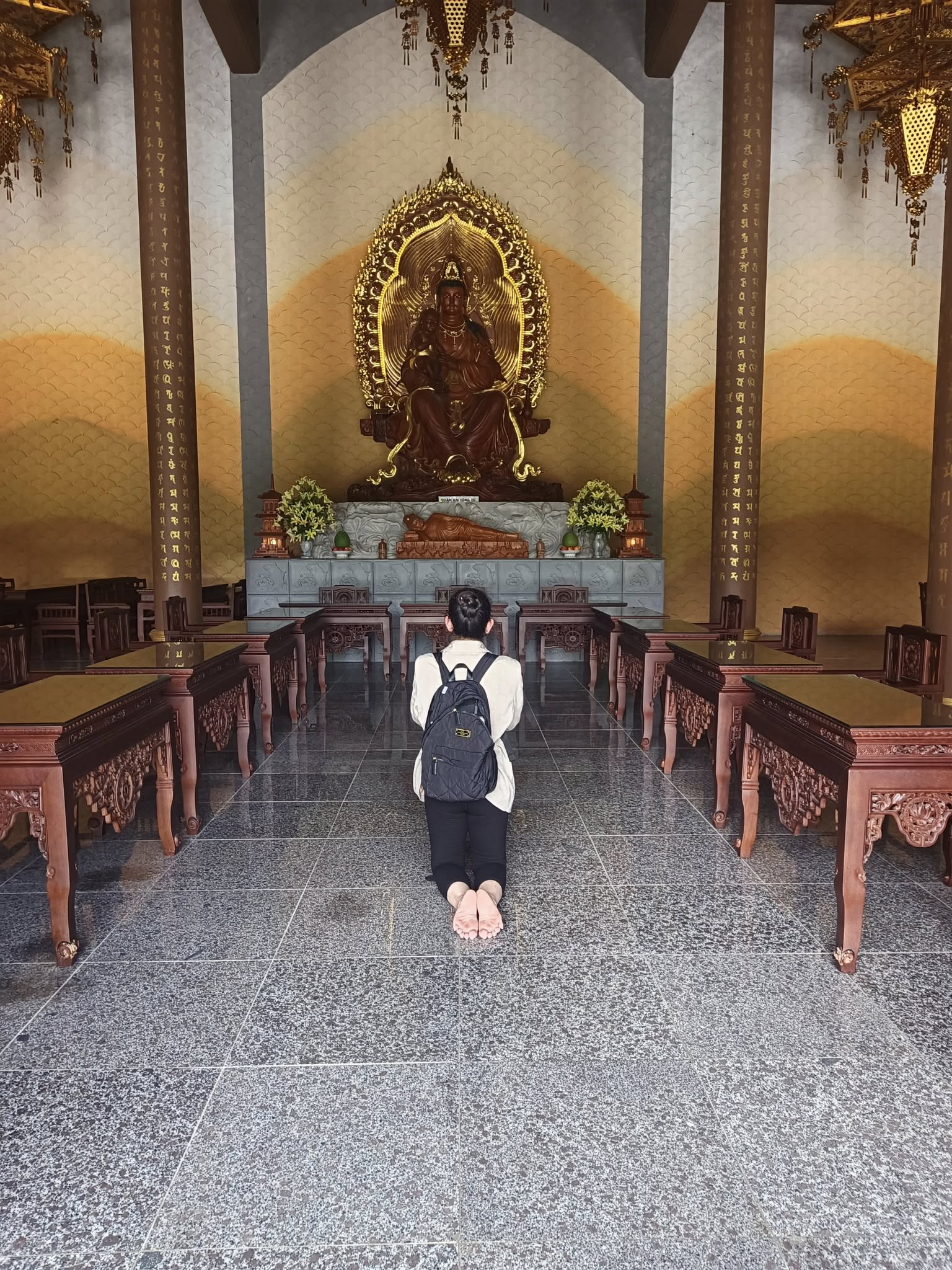
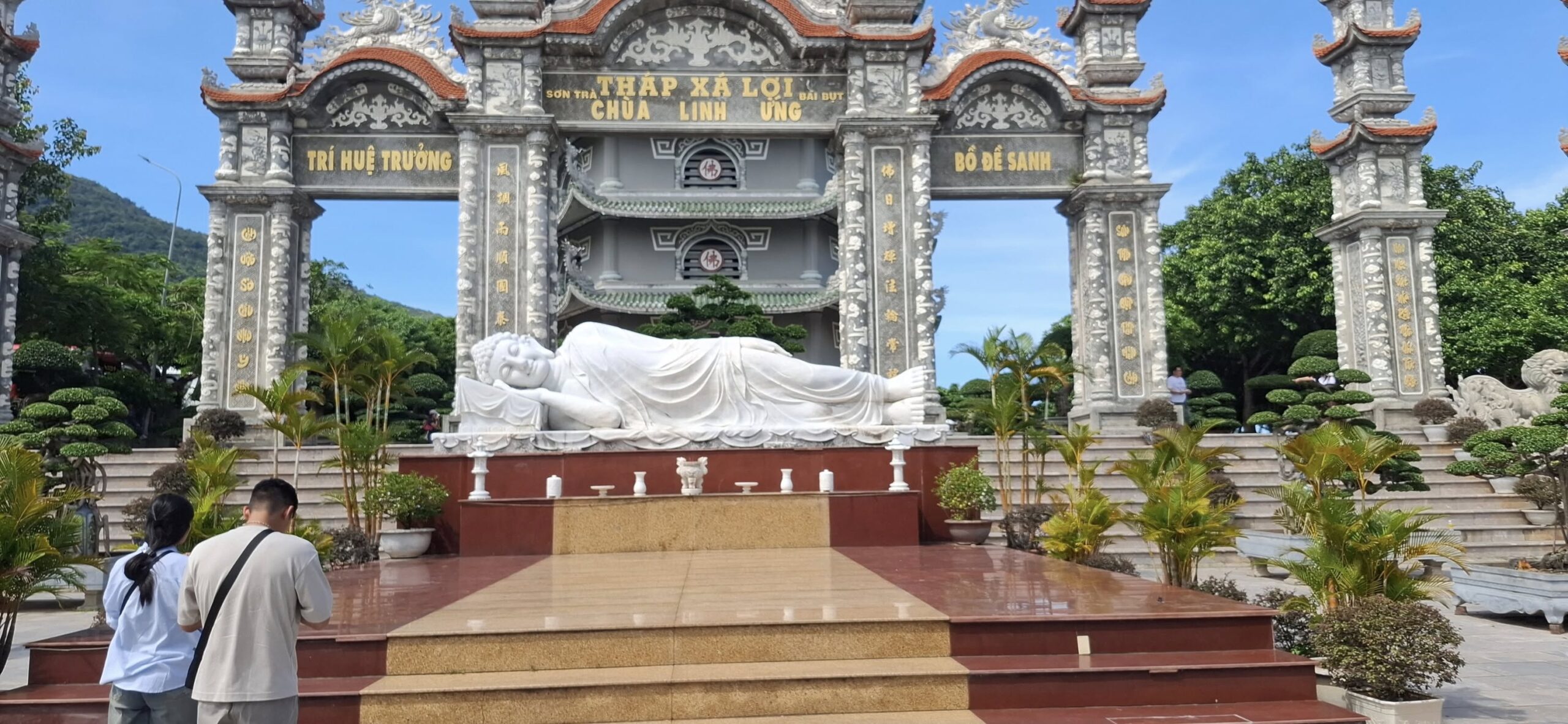
Buddha brings the faithful to their knees.
Great photo. And wow, that’s a very different temple interior than what you’d see in Korea or Japan: the tiled floor, the strange rows of tall tables (I bet they’re laden with plates of food during ceremonies), etc. You see, at the front, that there’s the large, seated Buddha and a much smaller, reclining Buddha. The reclining pose is a standard Buddha pose representing the moment of the Buddha’s death from food poisoning. He was 80 when he died. Supposedly, his last words were, “Work out your salvation with diligence!” In other words, don’t wait for a do-over life. The next life will be shit if this life was shit.
Out of respect, Swan was asked to wear this wraparound skirt to cover her legs while inside the temple.
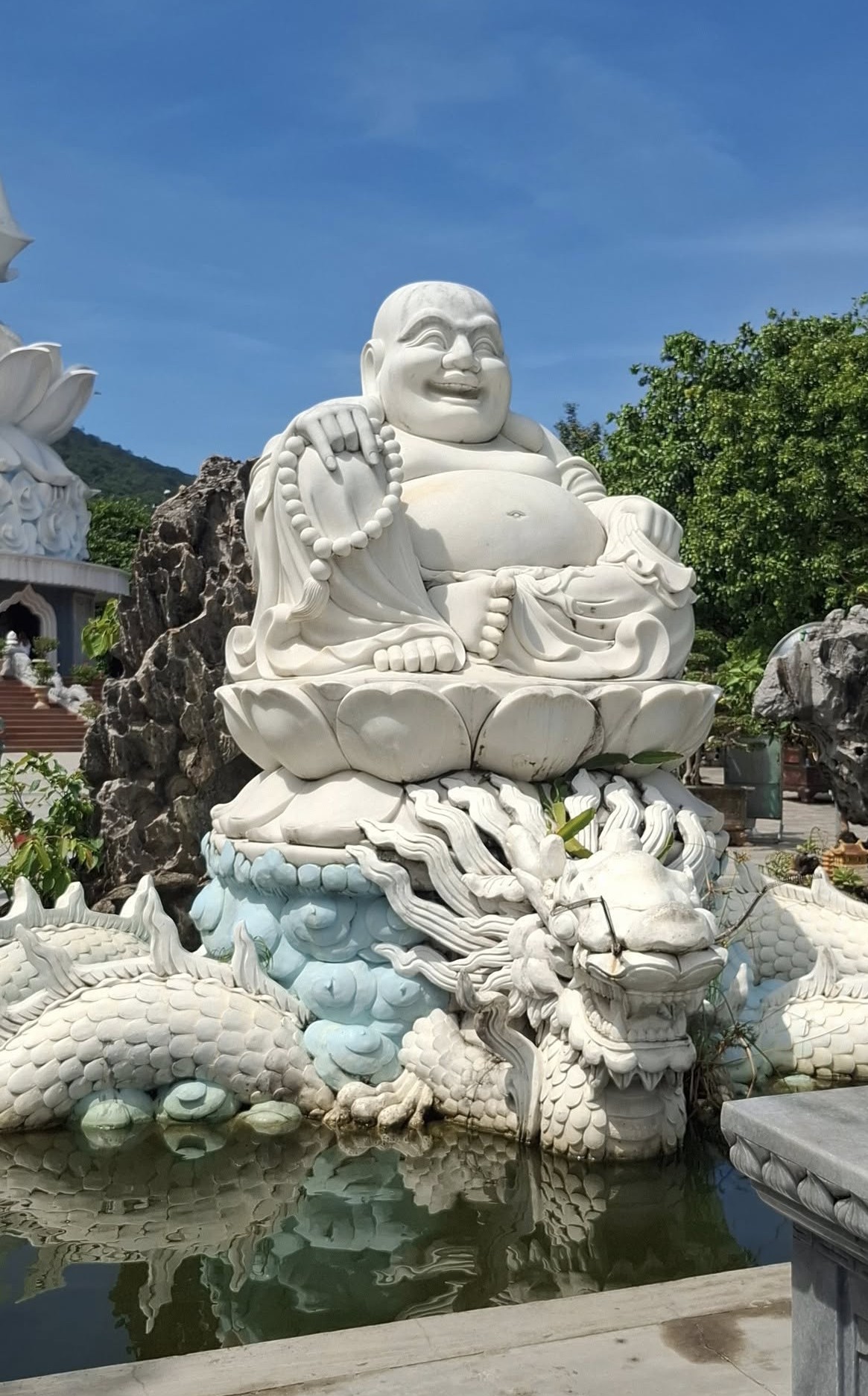
The fat “Buddha” is called 포대스님/Podae-sunim in Korean (I think it’s “Butai” in Chinese, “”Phật Di Lặc”” or “Buda” in Vietnamese). An American friend of mine has always called him Happy Charlie. Happy Charlie is not the earthly Buddha himself, but a saint representing good fortune, prosperity, etc.; the original Siddhartha Gautama Şakyamuni spent five years as an extreme ascetic before attaining enlightenment, and he was skinny his entire life (see the sculptures of the Starving Buddha). So all that nonsense about “rubbing the Buddha’s belly” applies to Podae, not to Şakyamuni. Podae might be considered a “buddha” (lower-case “B”) in Mahayana thinking (as we all are), but he’s not the Buddha.
Yet another fancy building.
That almost looks like the main dharma hall. Based on your earlier photos, I’m guessing this place was the Linh Ung Pagoda, site of the biggest Buddhist temple in Da Nang. Definitely impressive.
It seems God was keeping an eye on things.
Very nice of the Judeo-Christian God to watch over the Buddhists. But I guess he’s the God of all people, although Jesus famously noted that he’s God of the living, not the dead (Matt. 22:32, Mk. 12:27, Lk. 20:38).
The portal awaits
That’s an ambitious-looking structure. Korean temples usually have what’s called an “ilju-mun/일주문” (one-pillar gate) out front. You see a lot of them on my various walk blogs. Korean ilju-mun look a lot like a top-heavy version of a Japanese Shinto torii. This gate in your photo looks very SE Asian. I’m freaked out by the Roman letters of the Vietnamese alphabet on there. Seeing Latin on cathedrals in France is one thing; seeing Roman letters on Buddhist structures is another. Weird. David Lynchian.
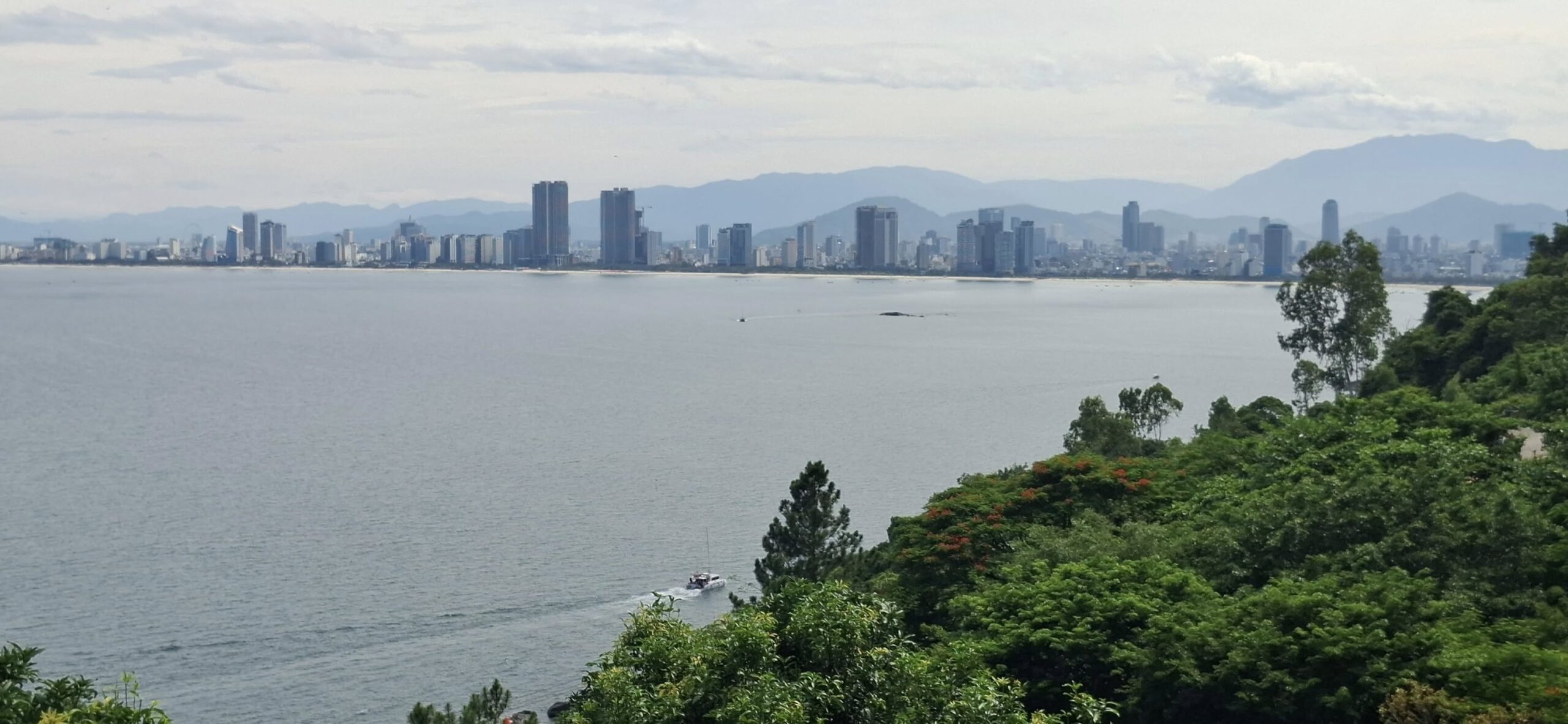
Da Nang in the distance.
I’m thinking of Robin Williams singing, “Da Nang me… Da Nang me… went out to get a rope and hang meeeee…”
Who is that looking at my ass?
The bodhisattva of compassion (see above), staring with sympathy.
“Yes, ma’am. Whatever you say, ma’am. No offense intended.”
Given how much you love beer, I’m surprised you didn’t remark on the bottle she’s holding. Ambrosia, or the nectar of everlasting life. Definitely Mahayana, evolving away from core/original Buddhist notions of impermanence.
Whaddya mean[,] he looks like me?
Maybe your new nickname should be “Podae John,” and people should rub your belly. Actually, “Podae John” sounds like a good name for a new type of sandwich. It should be a big, fat, expensive one. And for the Buddhists, there should be a vegetarian version… although I bet Vietnamese Buddhists, like most Korean lay Buddhists, eat meat without worry. Of course, violators of religious precepts are nothing new: plenty of Jews eat pepperoni pizza; plenty of Muslims (e.g., in Qatar) are heavy drinkers who like bacon, etc.
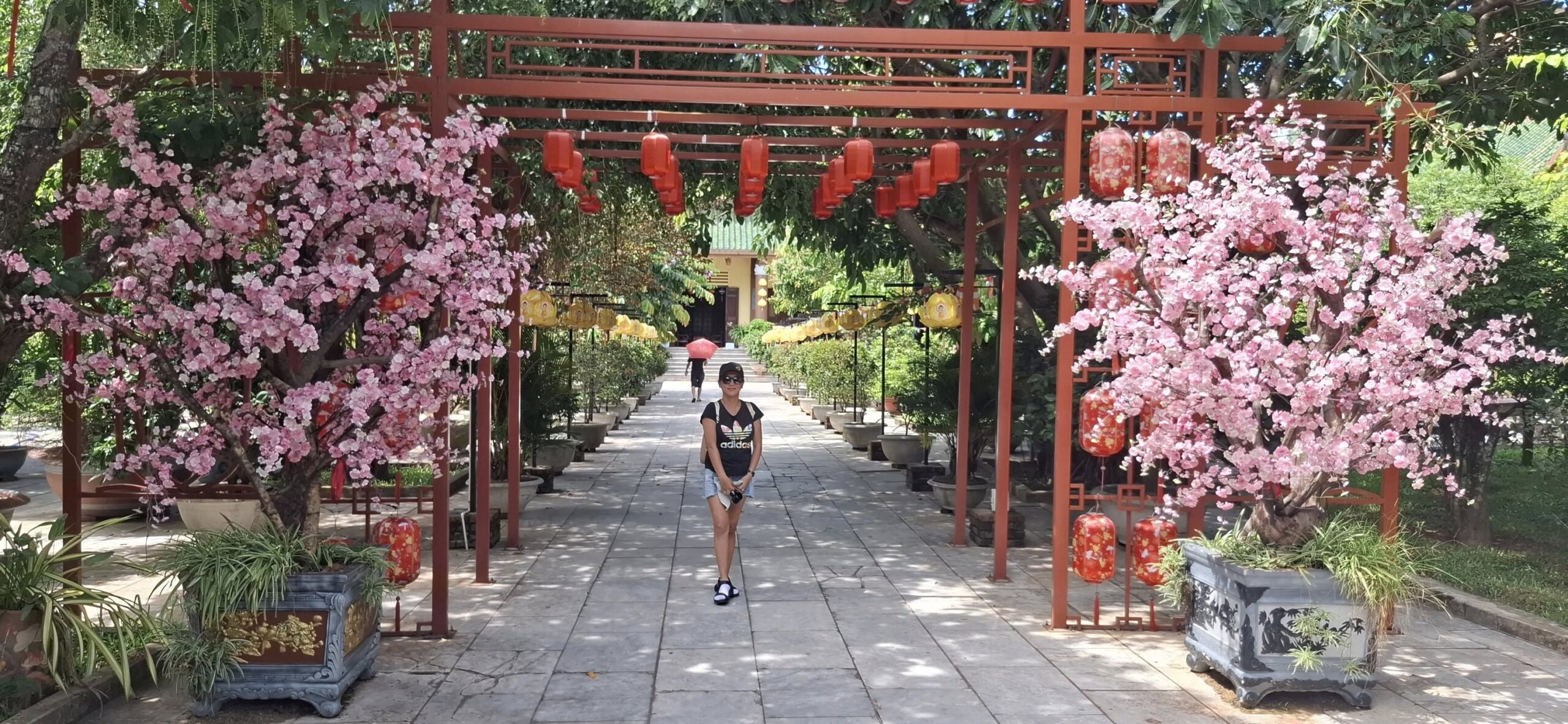
Are you a cherry girl?
Damn—blossoms that late in year, eh?
I guess even statues get tired.
Well, now you know that that’s representing the Buddha’s death.
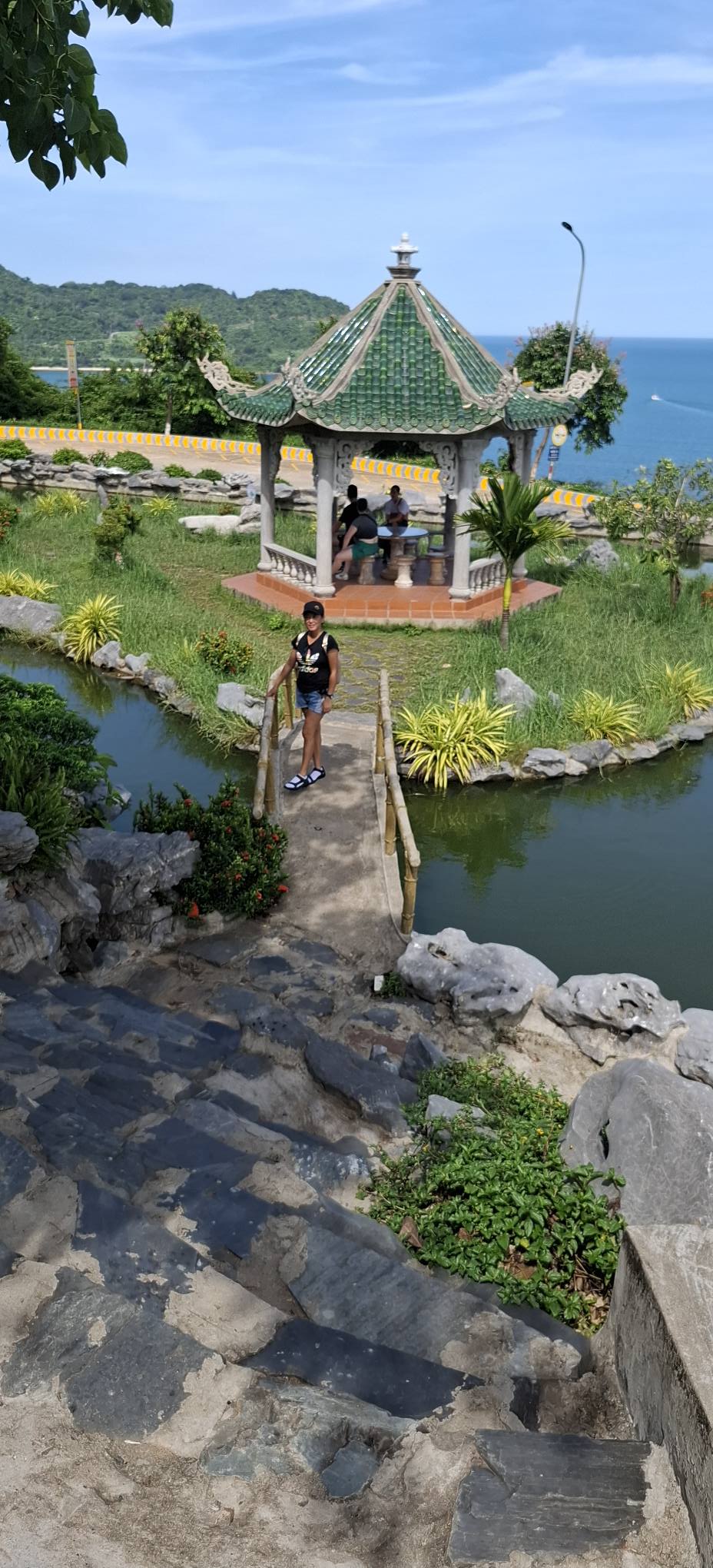
That’s a bridge too far, Swan, come back!
And that path leads to the Vietnamese version of a shwimteo. Nice.
I’d visited several temples in Korea with my Buddhist wife, but they didn’t resonate with me the way this one did.
Call me biased, but I prefer the Korean temples.
This really is my kind of place. I’m sure I’d hang out here and drink beer regularly if I was a resident.
Yup—it’s the bubble of Americana. And once sucked in, you’d never look at another temple ever again. Well, to each his own, I guess.
While we waited for the food, the owner of Dirty Fingers came by our table to introduce himself. Scott is an American who hails from Louisiana originally.
What are the rules about owning businesses in Vietnam? Can expats truly own them, or do they need a Vietnamese partner?
As we finished our meal, Steve complimented my “Drunken Grownups” t-shirt, saying it had taken him a while to catch the Dunkin’ Donuts reference.
He sounds immersed in Viet culture. How much Vietnamese does Steve speak?
Well, so far, this is looking to be a nice trip, even if it is to an authoritarian regime. Have fun in Hoi An. I look forward to the photos. You don’t feel spied on, do you?
I wrote:
Damn—blossoms that late in year, eh?
I see I didn’t correct everything. Nuts.
Gathered for a sacred rite
Subconscious minds allied
Call upon immortals
Call upon the oldest ones to intercede
Rid us of our human waste
Cleanse our earthly lives
Make us one with darkness
Enlighten us to your ways
From churning worlds of mindlessness
Come screams unheard before
Haunting voices fill the room
Their source remaining undefined
Shadows cast from faceless beings
Lost for centuries
Lords of death, I summon you
Reside within our brains
Cast your spells upon our lives
That we may receive
The gift of immortality
Bestowed on those who seek you
Gathered for a sacred rite
Subconscious minds allied
Call upon immortals
Call upon the oldest ones to intercede
Rid us of our human waste
Cleanse our earthly lives
Make us one with darkness
Enlighten us to your ways
Lords of death, I summon you
Reside within our brains
Cast your spells upon our lives
That we may receive
The gift of immortality
Bestowed on those who seek you
Now immortal
Thanks for sharing, Satan.
Kev, if you know Buffett, you have great taste in music!
Thanks for some Buddhist tidbits to munch on. Interesting stuff.
Yes, some of the buildings had signage that they were not for public access.
I’m glad to learn that that bodhisattva of compassion has a forgiving nature. I’d love to taste her nectar.
Robin Williams sang that “Da Nang me” lyric in the clip I posted. I need to re-watch the whole movie.
The temple is the only place I’ve seen cherry blossoms in full bloom. It must be a special undertaking.
Damn, your comment quotes pointed out another mental lapse of mine…in one paragraph, I call the Dirty Fingers owner “Scott,” and in the next, I call him “Steve.” Damn, that’s lame, even by my low standards. For the record, his name is Scott. I don’t know what the requirements are for owning a business here. Didn’t get into much details in our brief conversation, but I assume he has a Vietnamese wife. I’m not sure if he speaks any of the language, but he’s been living here for ten years or more, if I remember correctly.
Nope, same as with my trip to Saigon, I don’t feel any commie oppression here. I don’t think the government gets that involved with policing the citizens unless someone crosses the line. The locals I’ve spoken to, like my driver Tom, speak highly of their leaders.
My day began early, and it is ending late. I will probably have to do the Hoi An report tomorrow.
Thanks again for the enlightening comment. I don’t use AI, but maybe I need to.