

Goodbye, Hue and hello again, Da Nang.

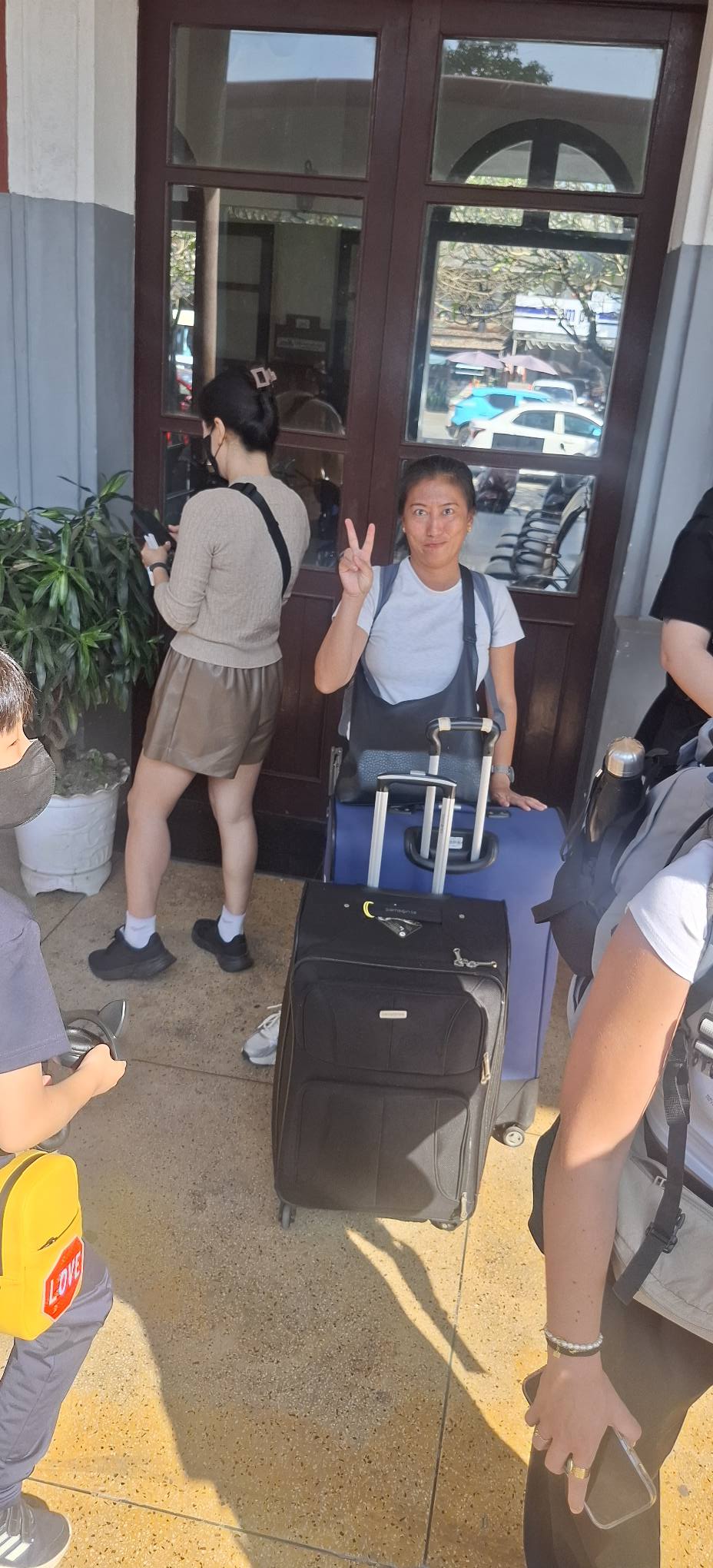
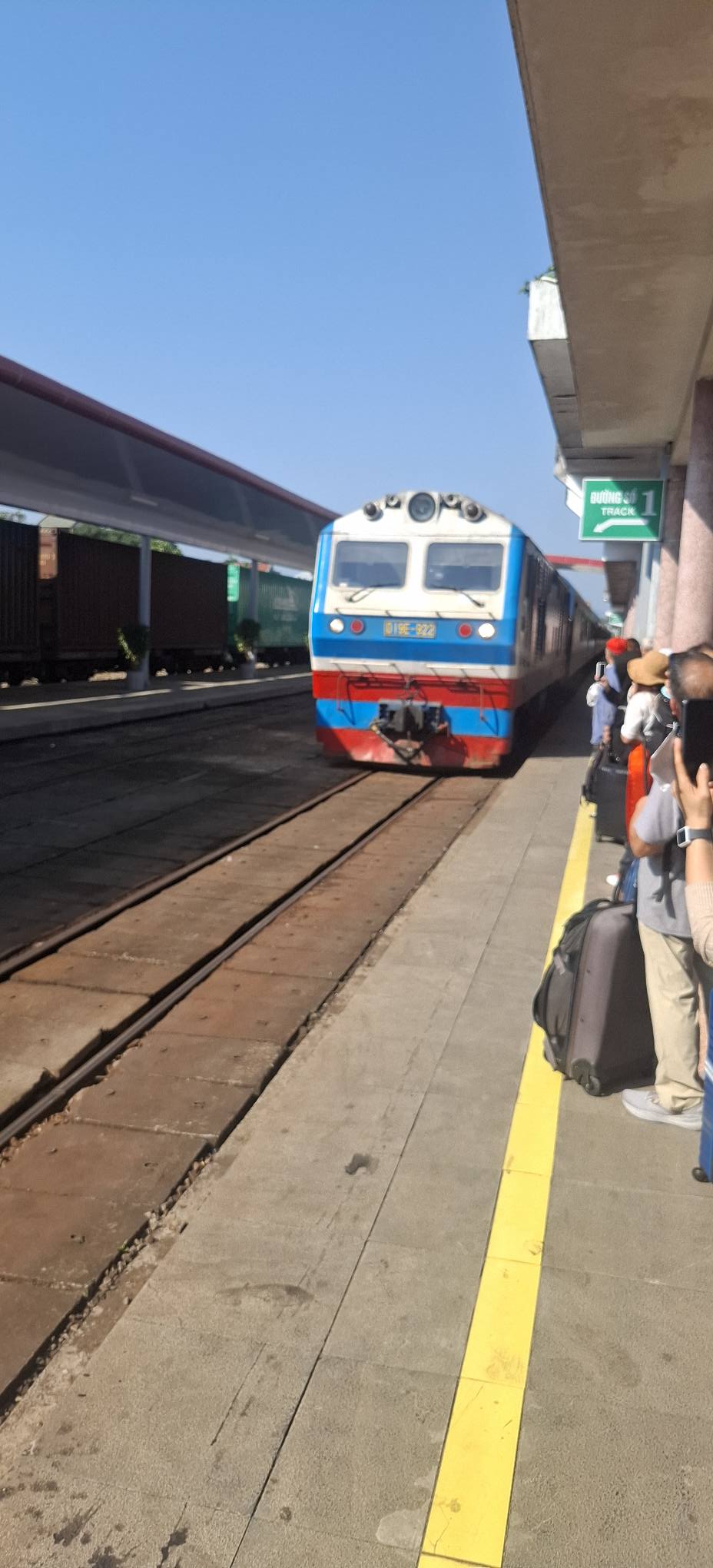

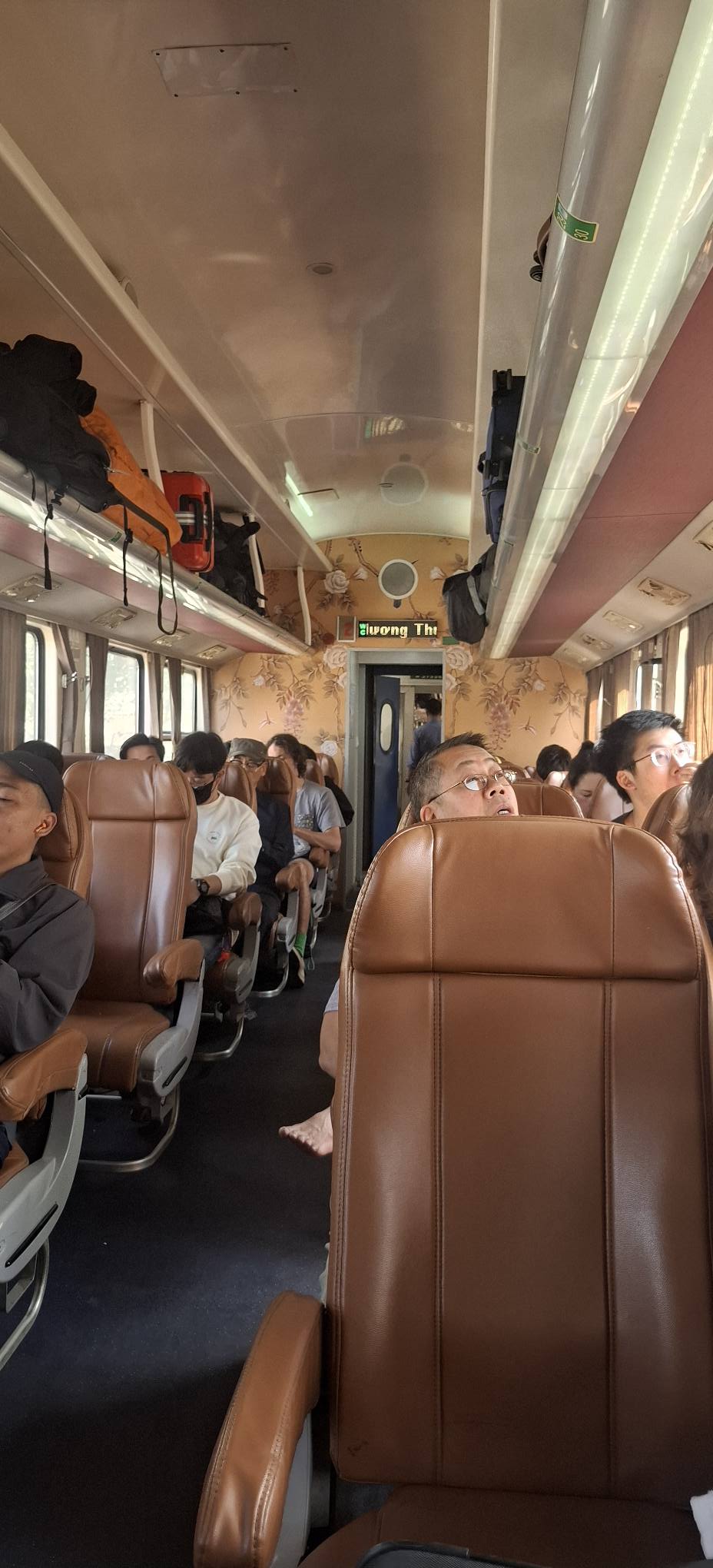
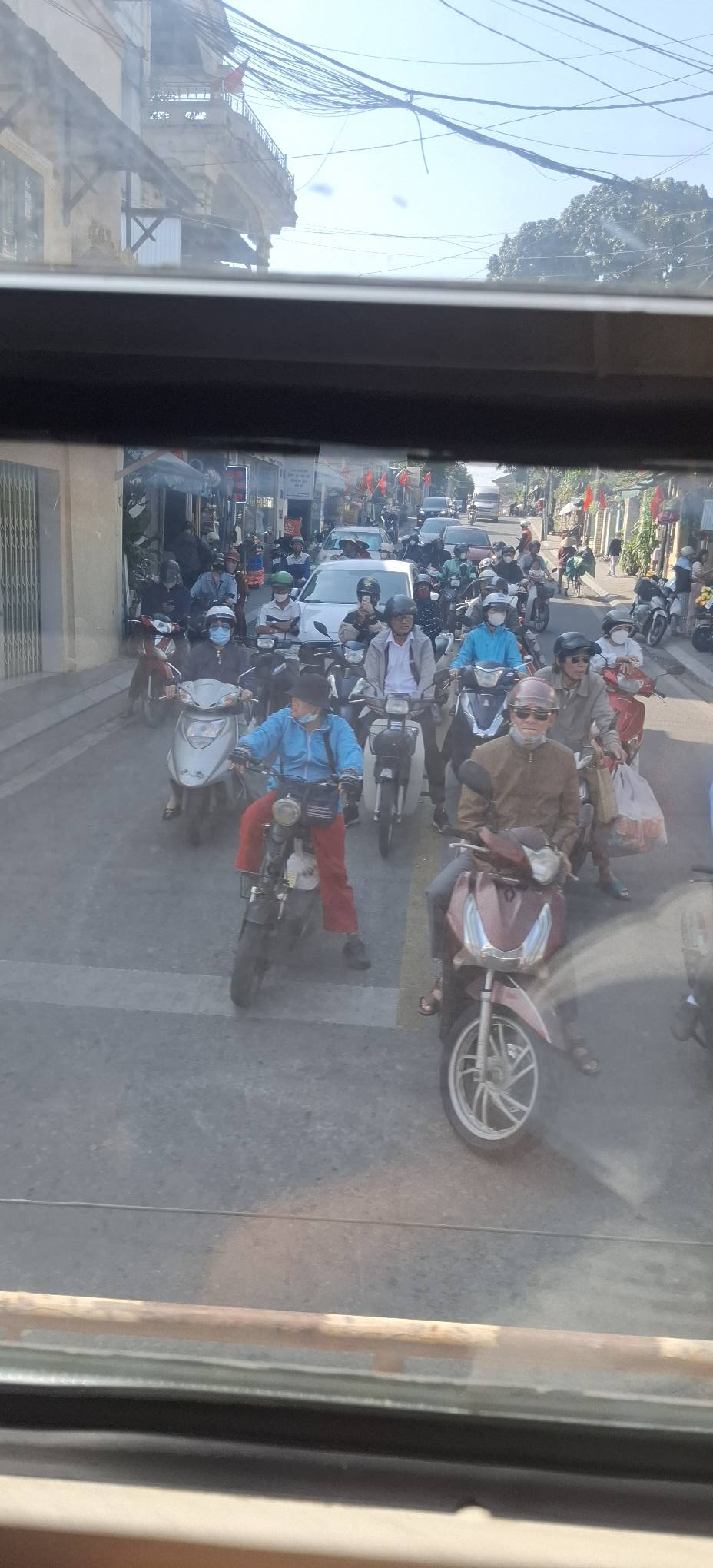
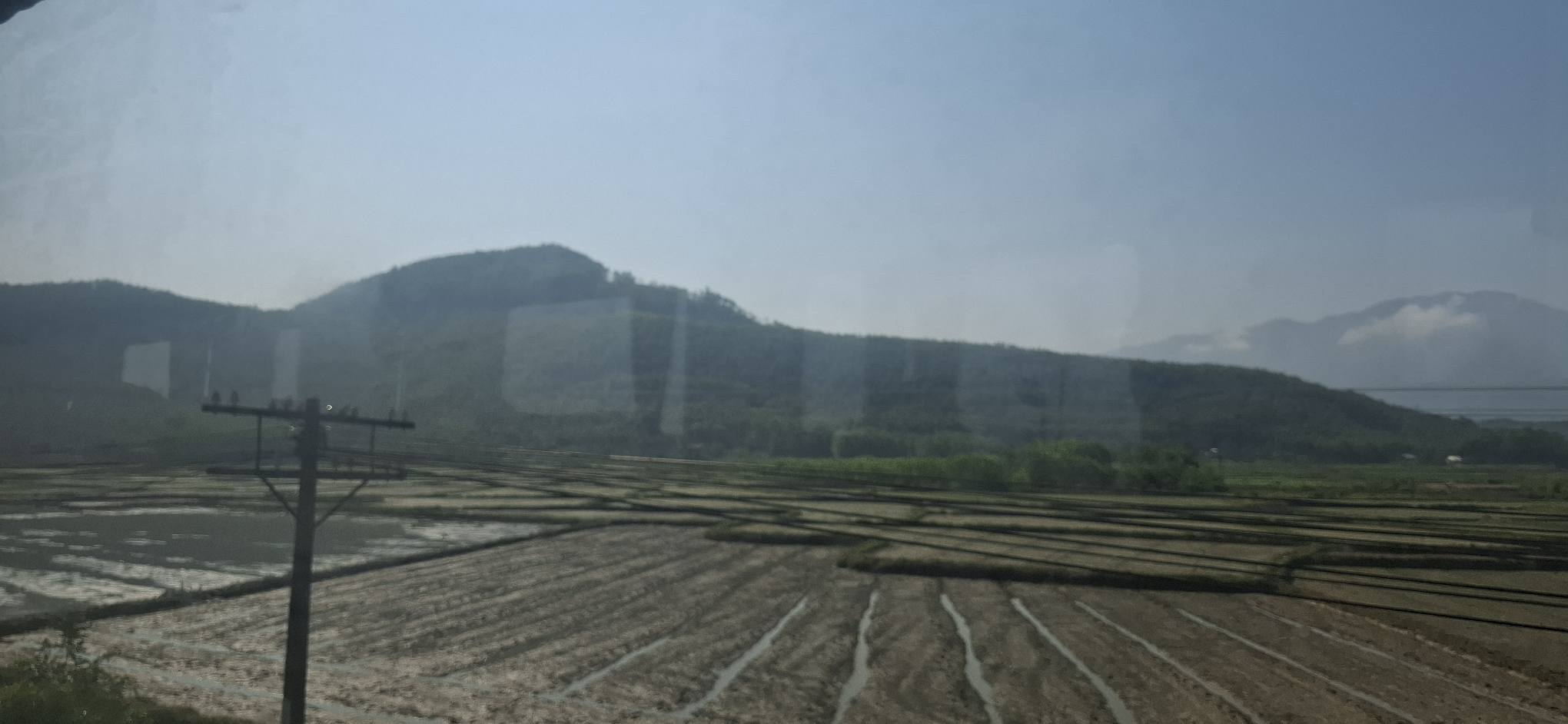
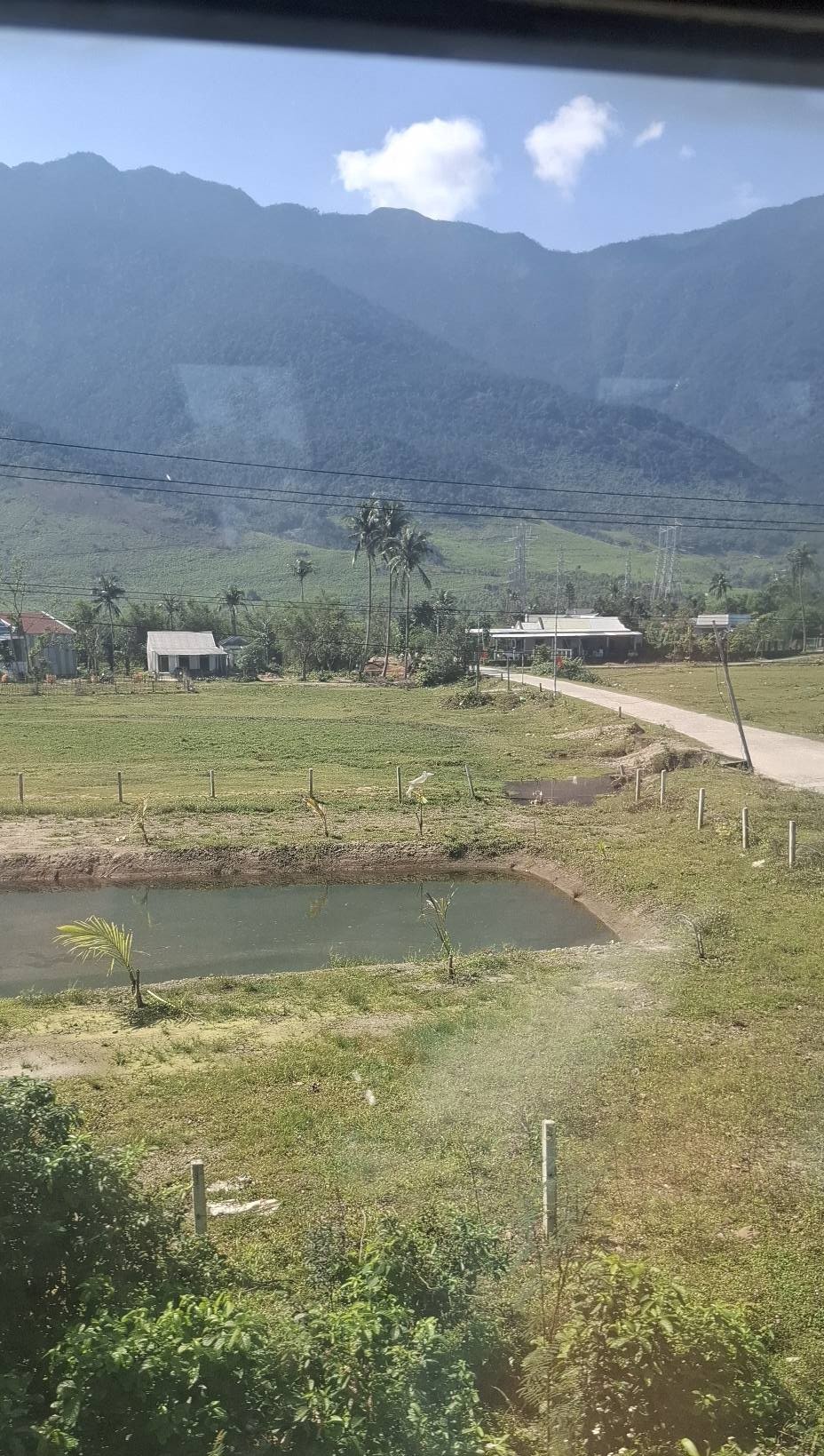
And three hours after we began our journey, we pulled into the station at Da Nang. We took a Grab car back to the hotel we had stayed in last week, the Haian Beach Hotel. The gal at the check-in desk remembered us and gave us a hearty welcome back.
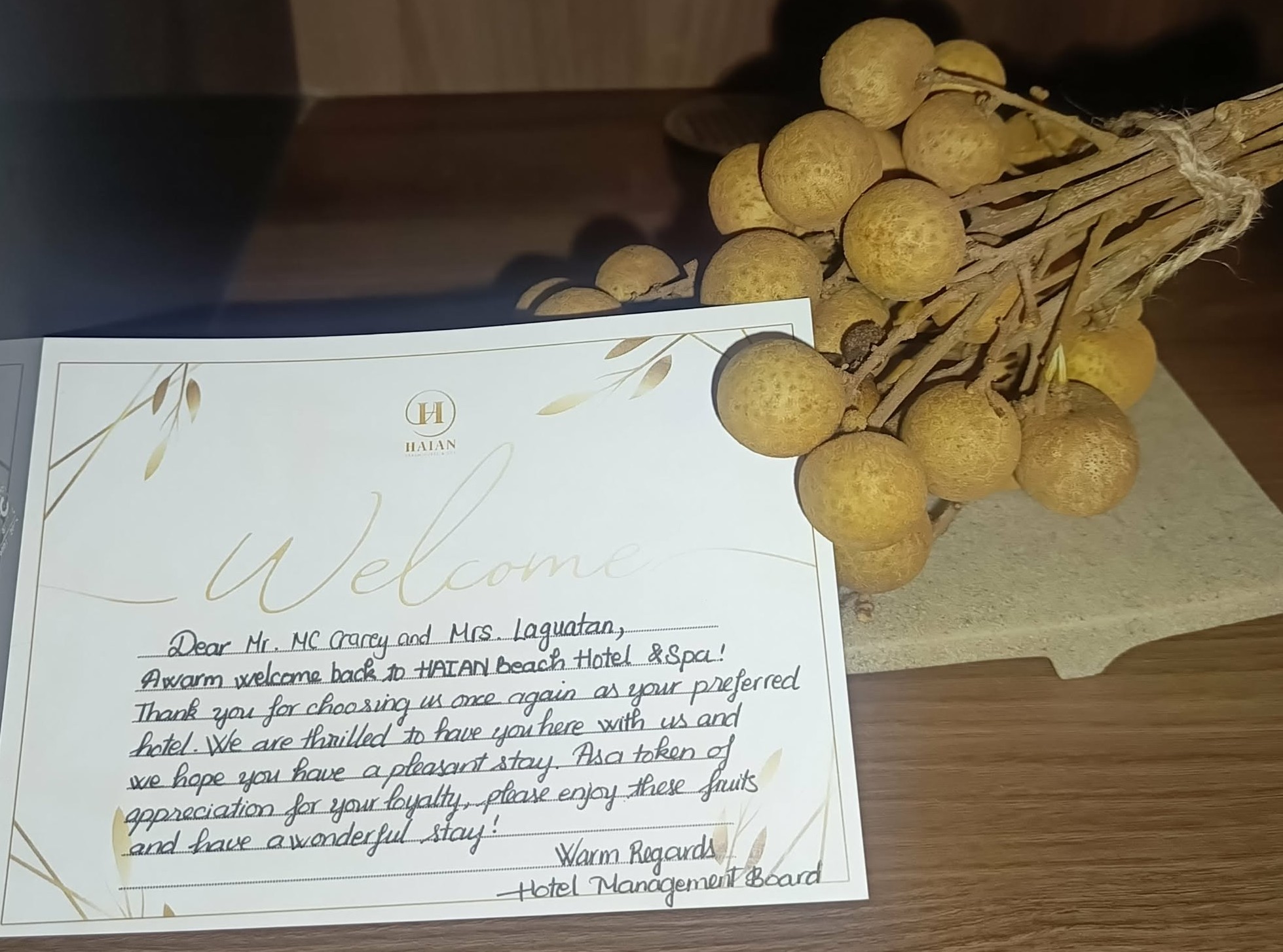
This is the nicest hotel I’ve ever had the pleasure of staying at: friendly staff, a great breakfast buffet, and comfortable rooms. The Haian is doing it right!
When you are staying across the street from the beach, it is only appropriate to go there, especially when the beach features our favorite beach bar, the Maia.



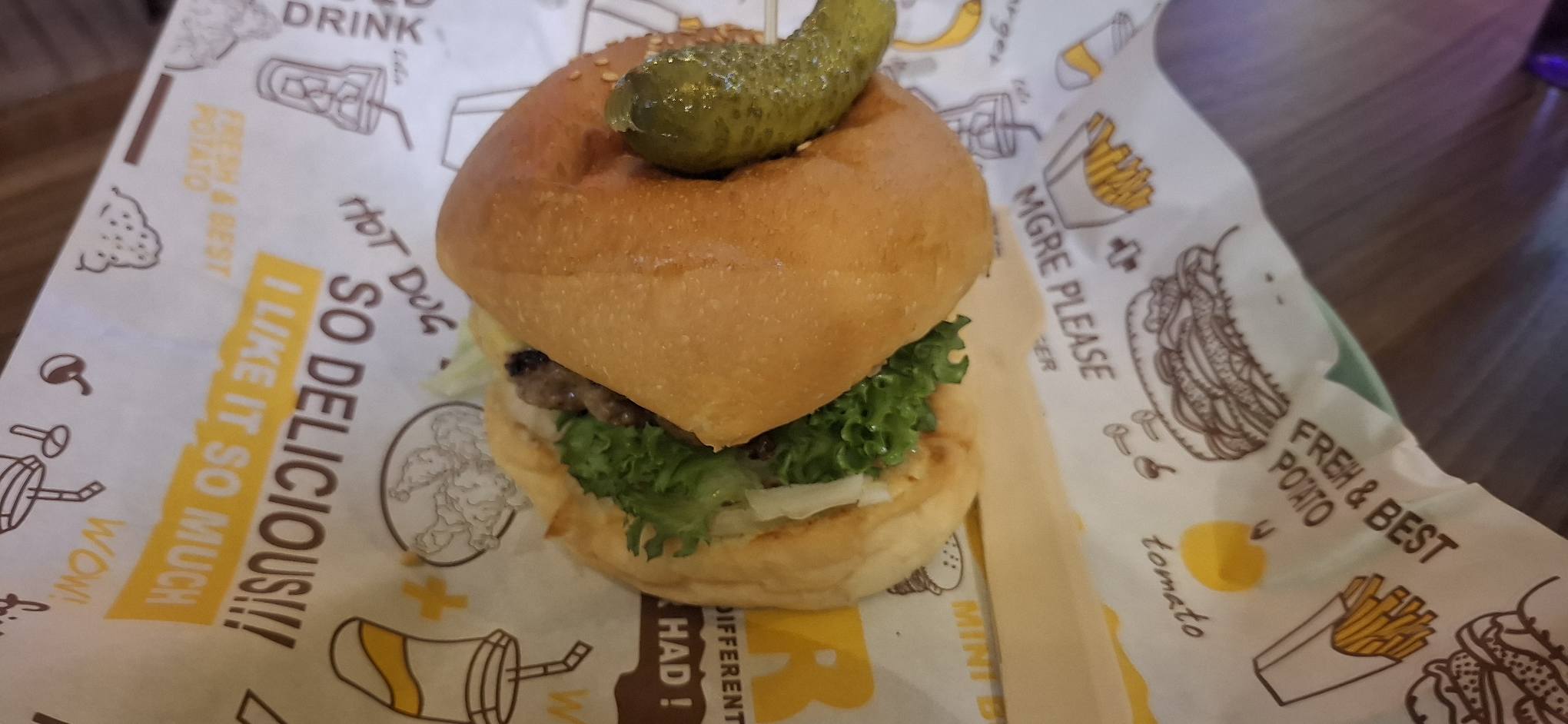
When it was time for some supper, we talked about making the hike out to Dirty Fingers, but decided to save that for another day. We walked a bit into town, and Swan declared she wanted another Fly Burger. Fine by me. Turns out, this joint with the disgusting name is quite highly rated.
Here’s a short bonus video so you can get a feel for the place:
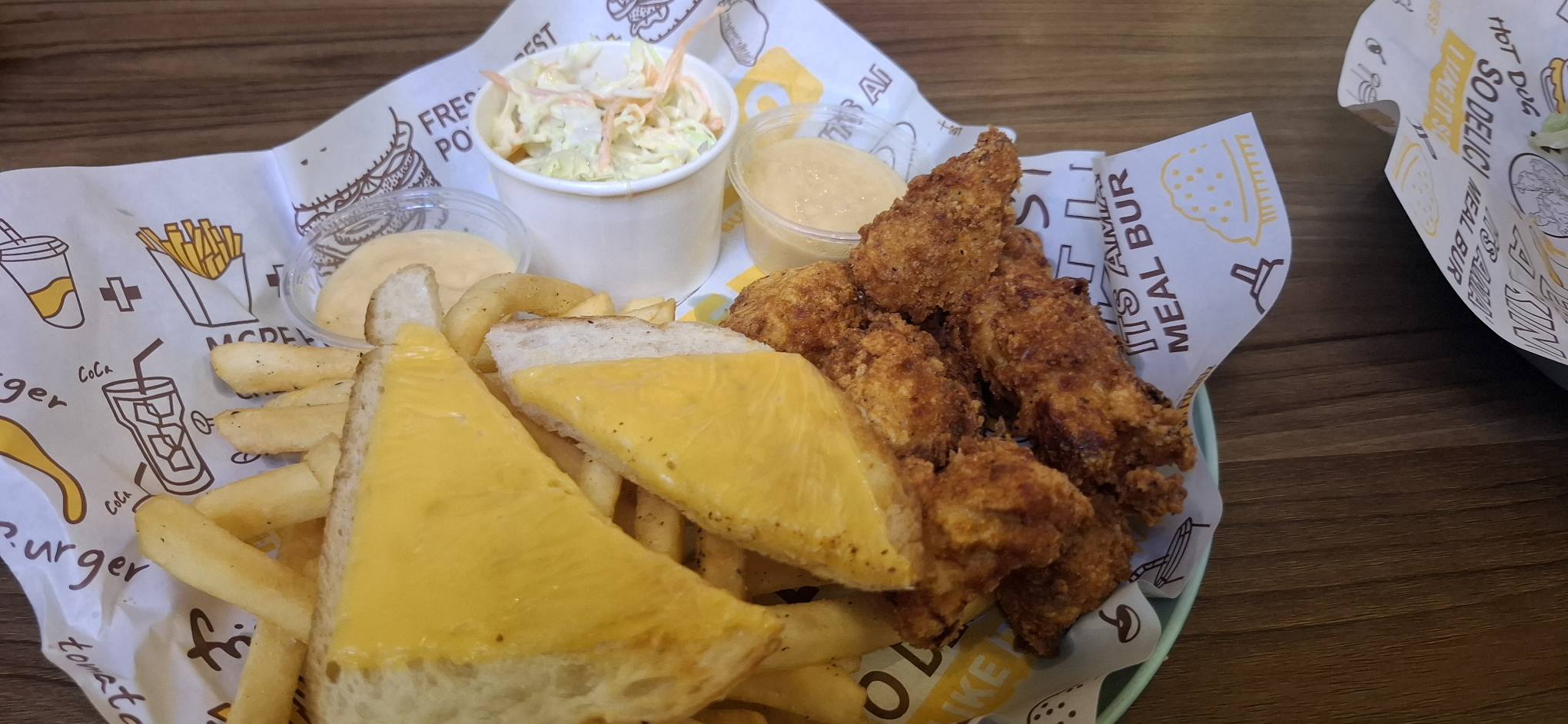
I wasn’t in the mood for a burger, so I went with chicken nuggets.
To tip or not to tip?

We headed back towards the hotel after our meal, keeping our eyes open for a suitable nightcap venue. Not seeing anything appealing, we rode the hotel elevator to the 22nd floor and had a drink at the rooftop bar.


And we were a short ride away from our 5th-floor room when our evening out came to a close.
It’s the end of September 2016 in the LTG archives, and it is also the end of another relationship. Go figure.
Today’s YouTube video shows the train ride I took, with better shots of the scenery (I was on the wrong side of the car for the best views). She mentions the Hai Van Pass, but the train doesn’t go that way; it takes a lower route. No way it would have made it up and over the mountain, even on the relatively small inclines we encountered, the train slowed to a crawl.
Let’s get these out of the way:



Okay, time to see what happens next.
Best hotel AND best chickadee nuggets evah? Fo evah evah? Sounds like you hit the jackpot there, nagger. Keep keeping on.
My first train ride since the Seoul-to-Busan bullet train all those years ago (other than a commuter train in Manila, the PI is devoid of this means of travel).
Interesting. Those train seats look like certain Korean bus seats.
She’ll be comin’ round the mountain when she comes…
Have you seen, in Vietnam, any mountains with the unique charm and mystique of your beloved Easter Mountain back in the PI?
This is the nicest hotel I’ve ever had the pleasure of staying at: friendly staff, a great breakfast buffet, and comfortable rooms. The Haian is doing it right!
I hope they’re not preparing your group for slaughter.
How could I refuse? And what have they got against Polish people?
“They keep us off the poles.” I like their sense of dignity and self-respect. Life is a choice and doesn’t have to be an endless daily grind of wiggling hips and gobbling foreign sperm and taking care of five unintended kids.
The view from the rooftop.
Da Nang’s population is about 1.3 million. At around 10 million within city limits, Ho Chi Minh City is comparable to Seoul’s population, but greater HCMC is closer to 20 million. So the dynamic is a lot like in Korea: one or two huge cities, then the population for all the other cities falls off drastically.
Seoul: 11 million; greater Seoul = 26 million (50% of the country)
Busan: 3.5 million
Daegu: 2.5 million
Couldn’t think of anything to rhyme with “twelve” for your blog title, eh? May I suggest the following non-starters?
Day Twelve, We’re Still Ourselves
Day Twelve, Massacred Elves
Day Twelve, the Buddha Was Shelved
Day Twelve, Into Girlfriend I Delve
Day Twelve, Fell on My Pelv… is
Will Day Thirteen bring back the rhymes, or now that the pattern is broken, will we see normal prose in your blog titles again?
Thirteen, Sights Unseen
Thirteen, No In-between
Thirteen, Hey—That’s Gangrene!
Oh, right, about “Lady Buddha”—so once again, this isn’t a Buddha, but the selfsame Gwanseum/Kwan Shih Yin bodhisattva of compassion that we’ve talked about before. She’s called “Quan Thế Âm” in Vietnamese, straight from the Chinese.
Gwan/Kwan/Quan = observe, listen to, perceive
Se/Shih/Thế = world
Eum/Yin/Âm = sounds
Usually roughly translated as “She who hears the cries of the world.” One photo at the website you linked to shows her with the other non-Buddha, Budai/Podae/”Happy Charlie” who is a bodhisattvic incarnation of Maitreya (Buddha of the Future) and generally represents happiness, good fortune, and sharing.
Kevin, it’s so confusing. Where does Jesus fit in? 🙂 Everyone calls that statue “Lady Buddha,” but I knew that didn’t make sense. Thanks for the explanation. I’m happy now!
Kevin, well, the seats were more comfortable than coach-class on a budget airline.
Nope, no Easter Mountain comparison. I visited Marble Mountain yesterday, which was a good adventure.
Yeah, maybe the hotel is going to kill us with kindness. Bring it on!
I wasn’t familiar with those population stats. Been to Ho Chi Minh, and it had a Seoul-like feel (with worse traffic). Da Nang is definitely more my speed. I think I’d get bored in places like Hoi An and Hue after a while.
I think “rails” kinda sorta rhymes with twelve. Call it poetic license. I was going to dump the rhymes for the teen days, but I’ll steal one of your suggestions instead. Thanks for that!
Psoriasis, just think if I’d ordered those nuggets to be delivered to my hotel!
And I don’t nag.
In Mahayana Buddhism, the idea of “buddhahood” is expanded and cosmicized to include not just all sentient beings, but all of reality. There’s “the Buddha,” but there are also “buddhas.” In that cosmic sense, Happy Charlie is “a buddha,” and Lady Buddha is “a buddha.” You and I are “buddhas,” participating in reality and expressing our natures, which is what buddhas do. The poop you poop is also a buddha.
In Christian theology, people make reference to the “Jesus of History” and the “Christ of faith.” Some folks call this the difference between pre-Easter and post-Easter Jesus, but the idea is that, with the Jesus of history, we’re talking about a specific man who lived in a specific area in a specific time of history; with the Christ of faith, we’re talking more about something akin to a cosmic principle. John’s gospel, different from the first three “synoptic” gospels (synoptic = syn/same + opsis/same/together, i.e., “seeing things the same way”), packs a ton of theology into just a few verses: “In the beginning was the Word. And the Word was with God, and the Word was God. […] And the Word became flesh and dwelt among us full of grace and truth.” This is directly enjoining us to think of Jesus as the incarnated Word of God, a cosmic principle who has existed since the beginning, i.e., was and is co-eternal with God. So the “Christ of faith” has been cosmicized for as long as there’s been a Bible.
I grant that this is only a very rough parallel to what was going on in Buddhism (just a man vs. cosmic principle), but I hope the Jesus analogy gives your mind something relatable to latch onto.
In Theravada/Hinayana Buddhism, the older sort of Buddhism found in the rest of SE Asia, the Buddha is a man—a teacher rooted in history (and one in a series of incarnations) who passed along principles and techniques for us to be able to follow a path that will lead through and beyond suffering. The “theology” of this form of Buddhism sees the founder as the “Buddha of history.” Mahayana, meanwhile, tends to see the Buddha himself as the incarnation of a fractalized cosmic principle—buddhas, buddhas everywhere.
One Korean Seon (Zen) master in Maryland once said during a dharma talk, “Even the drop of water is enlightened,” i.e., water is no less a full participant in reality than you are. I’ve given talks at churches on this topic, and some disgruntled Christians have groused that they don’t want to consider themselves the equivalent of a discarded Coke can (i.e., mere a material object versus a full-on person), which is a prideful thing to assert when you think about it: biblically speaking, we’re all dirt according to Genesis, aren’t we? Formed from the earth? Ashes to ashes, dust to dust, etc.
Seon/Zen is Mahayana, for what it’s worth. I remember being surprised when I learned that most Buddhism in Vietnam is Zen since SE Asian Buddhism (Thailand, Laos, Cambodia, etc.) is primarily Theravada/Hinayana. For more on the big differences between Mahayana (big vehicle) and Hinayana (little vehicle), see here.
I must have been half asleep. I wrote:
(synoptic = syn/same + opsis/same/together, i.e., “seeing things the same way”)
That should have been:
(synoptic = syn/same/together + opsis/seeing, i.e., “seeing things the same way”)
Sorry. As always, I wish there were a way to go back and edit comments.
Kevin, wow, thanks for sharing the distinctions and variations in Buddhism. On a surface level, I knew there were differences depending on the regions where it was practiced, but now I see it goes much deeper than that. Fascinating.
Although raised as a Pentecostal Christian, I am by no means a believer. It does seem that the aspects of Buddhist belief that leave it to the individual to find their path to Nirvana rather than an almighty God are more realistic and meaningful, at least from an intellectual perspective. I mean, for God so loved the world that he flooded the planet with forty days of rain, killing everything that didn’t fit on Noah’s ark. Yeah, I’m not buying it.
I assume Buddha didn’t perform Jesus-like miracles, raising the dead, making the blind see, etc., did he?
Kevin, okay, now I’m confused. I’m seeing your “correction” the same way. I was going to go and fix it for you, but I’m not sure what you are saying is wrong.
I’ve heard of miracle stories in Buddhism (e.g., Bodhidharma crossing the Yangtze while standing on a reed), but few about the Buddha himself. But apparently, legends about the Buddha grew like an encrustation around him. There are many such legends. Google “Buddha miracle stories,” and you’ll find a trove. Are they historically true? No. But it’s the sort of veneration that you’d expect from followers trying to bolster the reputation of their movement’s founder. I take miracle stories in the Bible to establish Jesus’ authority and glory. A lot of people mistake the Bible for a history book. Some aspects of the scripture are archaeologically verifiable (e.g., which king lived when), but a lot of biblical figures are essentially pious fabrications, there to make a moral point, not to be used as evidence that the Bible is historical fact. No, it’s better and safer to view scripture through the lens of metaphor and symbolism than as literal history. Besides, I don’t get why so many people have the urge to use “historical fact” to justify their faith. Faith alone should be enough for these people. Sola fide, as the Protestant doctrine goes (“faith alone”).